

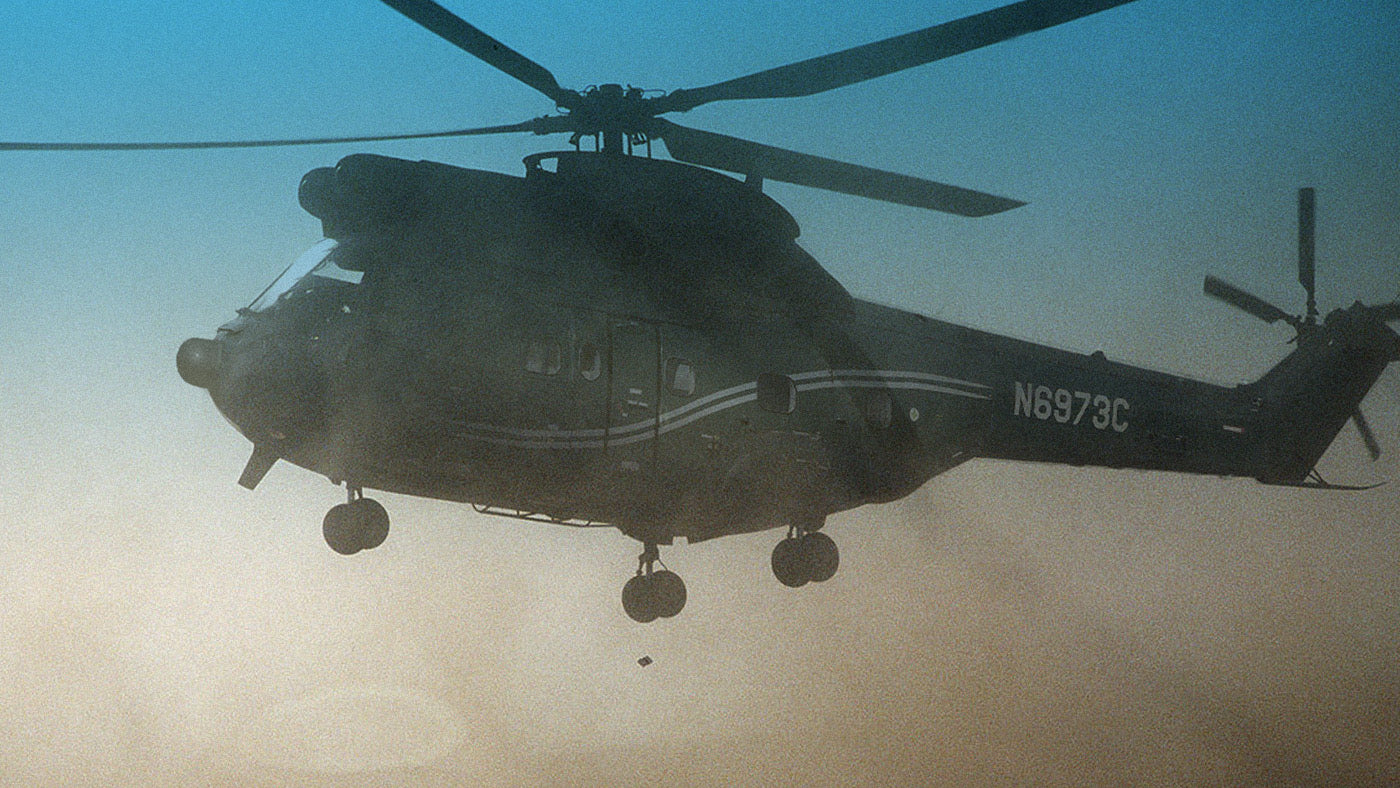
MotoArt has a new helicopter in the fleet! Joining an esteemed group of helis is N6973C, an Aerospatiale SA 330J Puma. Keep reading to find out all about the life of this aircraft.
What is the Puma helicopter?
 Photo by Chris England, used with permission.
During the 1960’s, to meet a French Army requirement for an all-weather troop and cargo carrying helicopter, Sud Aviation developed this four-bladed, twin engined utility helicopter during the 1960s. The first production SA 330 Puma entered the skies in September 1968; deliveries to the French Army began in 1969. It was a commercial success and continued to be produced by Aérospatiale, with licensed and unlicensed derivatives built in Romania and South Africa. The Puma has seen combat all over the world by many different armies and in several theaters, including the Gulf, Iraq, and Falklands Wars, as well as in civilian uses. Throughout most of the 1970s, the SA 330 Puma was Europe’s best selling transport helicopter.
SA 330J Specifications

Characteristics:
- Manufacturer: Aérospatiale
- TAIL #: N6973C
- CREW: 3
- Capacity: 16 passengers
- Rotor diameter: 49 ft 2.5 in
- Length: 59 ft 6.5 in
- Height: 16 ft 10.5 in
Performance:
- Range: 313 NM
- CRUISE SPEED: 134 KTS
- Ceiling: 15,750 FT
- Empty weight: 7,795 lbs
- MAX TAKEOFF WEIGHT: 15,430 lbs
- Rate of Climb: 1,400 FT / MINUTE
- Engine: 2× Turbomeca Turmo IVC turboshafts
MotoArt’s Puma: A History

MotoArt owner Dave Hall knew he wanted to add the Puma to his encyclopedia of aircraft as soon as he heard about it. “Such a great history to this Puma. We knew collectors would be just as stoked as we were to find it.”


This helicopter was built in 1976 and registered as D-HAXJ. In January 1977, it joined the Bundesgrenzschutz (German Border Patrol) fleet. The BGS, established in 1951, protected the border, airports and foreign embassies, and its special detachments, such as BGS-9, were ready for terrorist or hostage situations. In 2005, it was renamed and reformed as the Bundespolizei (BPOL) or Federal Police, and our plane remained in service with them until 2008.

Photo by David Fogwill, used with permission
EP Aviation purchased D-HAXJ in 2008, re-registered it as N6973C, and placed it under US military contract to serve in Afghanistan and Iraq until 2019.
 Photo by Robert Knoops, used with permission
SA 330J Puma PlaneTags


The Puma PlaneTags are not to be missed. They are numbered to 3,000 and will initially be offered in greens and grays, with some combinations available. Grab one for your collection or have one engraved for a loved one who appreciates the hardworking Puma helicopter. They are now available on PlaneTags.com.

Helicopter PlaneTags
Our helicopter PlaneTags collection is growing but we’ve already sold out of our CH-47 Chinook and Bell Huey UH-1F PlaneTags. Collect these helis before they are gone:
Helicopter Stories: PlaneTags Blog
In case you missed these related stories:
Bell Huey UH-1F: Missile Site Support At Its Best
Sikorsky H-3: Search and Rescue At Its Best
UH-46 Sea Knight: Unique and Heroic Service
Share:
Meet the PlaneTags Collector: Jim Emerson
Air Do 767-300ER: Farewell to the Original Wings of Hokkaido