

- by Dianna Lopez
Qantas 747-400: Celebrating 100 Years of Pioneering Aviation
- by Dianna Lopez
A question? Visit our contact page
This site uses cookies for better user experience and analytics.
2020 has been a momentous year in world and aviation history, and certainly for Qantas, who celebrates their 100 year anniversary on November 16, 2020. MotoArt is pleased to join the centenary celebration with the addition of a second set of Qantas Boeing 747 PlaneTags. Get yours today.

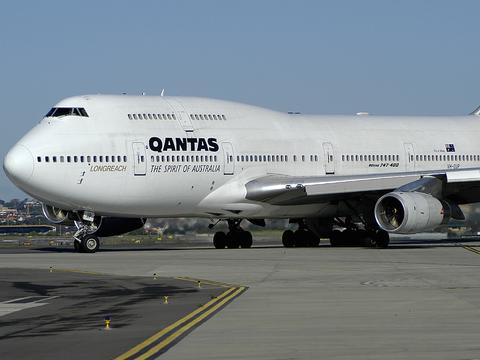
76ab - Qantas Boeing 747-438; VH-OJP@SYD;08.10.1999 flickr photo by Aero Icarus shared under a Creative Commons (BY-SA) license
Qantas is the flag carrier of Australia and a founding member of the Oneworld alliance. Its name is an acronym for its original name Queensland and Northern Territory Aerial Services. It began in 1920 as a humble outback airmail operation, and grew to become Australia’s largest airline, carrying over 50 million passengers a year. It has also been named as the world’s safest airline many times. Qantas celebrates its 100 year anniversary this year. For this occasion, the airline produced an enjoyable in-flight safety video ‘A Century of Safety’, spanning 10 decades of Qantas history, with stunning recreations of the aircraft, uniforms and locations, and featuring the airline’s own employees playing historic versions of their real life roles.

By Lasse Fuss - Own work, CC BY-SA 3.0 Link
The Boeing 747 served Qantas well. The first Qantas 747 was a 747-200, which joined the airline in August 1971. Over the years, according to Airfleets.net, the airline had 77 747s in five variants in its fleet. At one time, with the retirement of its 707s in 1979 Qantas became the world's only all Boeing 747 operator. This ended in 1985 when the first Boeing 767 joined the fleet. Due to the coronavirus pandemic in 2020, Qantas sped up its 747 retirement, retiring the last of the 747s several months early.
“It’s hard to overstate the impact that the 747 had on aviation and a country as far away as Australia. It replaced the 707, which was a huge leap forward in itself but didn’t have the sheer size and scale to lower airfares the way the 747 did. That put international travel within reach of the average Australian and people jumped at the opportunity.” - Qantas CEO Alan Joyce, on the impact of the 747 on Qantas and Australia

By Grahame Hutchison via Wikimedia
Qantas bid farewell to its 747s on July 22, 2020 with the memorable final flight of VH-OEJ. Piloted by Captain Sharelle Quinn, Qantas’ first female captain and a 747 pilot for 36 years, it began with a low altitude flight over Sydney followed by a spectacular Qantas ‘Roo’ before heading across the Pacific Ocean to LAX, then its final resting place in the Mojave desert.

220ci - Qantas Boeing 747-400; VH-OJP@LHR;05.04.2003 flickr photo by Aero Icarus shared under a Creative Commons (BY-SA) license
This aircraft took its first flight on April 29, 1992 and was delivered to Qantas soon after on June 26, 1992. VH-OJP was named City of Albury, after Albury, in New South Wales, Australia. Qantas has given its aircraft meaningful names since its first de Havilland DH.50s in 1926, named after figures in Greek mythology such as Perseus and Pegasus. While other planes in the fleet have been named after such topics as aviation pioneers, birds and inspirational phrases, the airline’s 747 fleet was named after cities in Australia. Additionally, all Qantas Boeing 747-400 planes are emblazoned with the word “Longreach” in addition to their city name, symbolizing the long reach of the 747-400 and also the town where Qantas was headquartered, Longreach, Queensland.
On August 30, 2010, at approximately 11:30 PM, the plane departed San Francisco International Airport for passenger service to Sydney, Australia. As it passed 25,000 ft, the number 4 engine failed, which ripped a large hole in its outer cowling and nacelle and released debris. The engine was shut down and the crew returned the plane safely back to SFO. The cause of this uncontained engine failure was due to a fatigue fracture of a turbine blade, which caused a rotor imbalance leading to the uncontained release of debris. This 747 enjoyed an otherwise quiet life of international passenger travel until retirement in 2012. After 20 years of service solely with Qantas, it was stored June 2012 at a Mojave desert boneyard in Southern California.


After the success of the Qantas 747 VH-OJN PlaneTags that were produced over the summer, MotoArt owner Dave Hall knew how important it was to acquire another Qantas 747 parked at a Southern California boneyard.

“Our Qantas 747 VH-OJN PlaneTags were overwhelmingly successful, not just with aviation enthusiasts in general, but mainly because of the Qantas family. We received an outpouring of messages from former and current Qantas employees, telling us about their experience with the airline and with this specific 747, and we were just amazed at the loyalty and the emotions that were evoked by this,” says Hall. “Our Qantas PlaneTags sold out in just weeks, even with some very visible problems with U.S. Post Office shipping at the time. Well, we added new shipping options to help our customers get their PlaneTags quicker, and we got ourselves another plane.”


MotoArt loves the Queen of the Skies and offers many other Boeing 747 PlaneTags from many different airlines. They are becoming a popular aviation collectible and make excellent gifts for your favorite pilot.

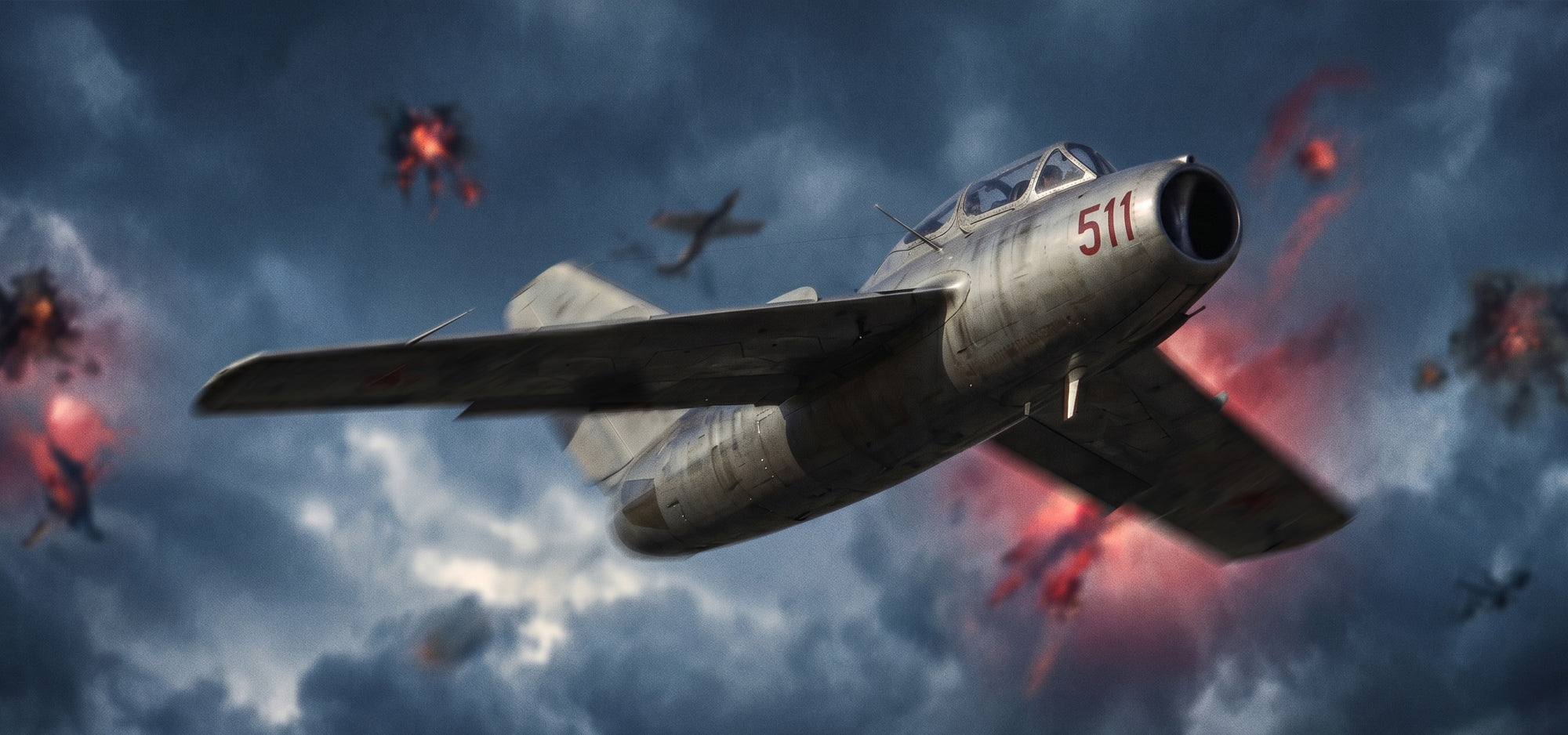
MiG-15: Cold War History Built Behind the Iron Curtain
The MiG-15 was one of the most influential jet fighters of the early Cold War. With its swept wings, near-transonic speed, and devastating cannon armament, it changed aerial combat forever and became a feared adversary in the skies over Korea.
Now, MotoArt is preserving the legacy of this iconic Soviet fighter with authentic PlaneTags made from the skin of Polish-built SBLim-2 N2400X “Red 511.” This rare trainer variant served for decades before eventually making its way to the United States, where it was preserved in 2026 for aviation enthusiasts and collectors alike.

Two NASA T-38 Talons: Training the Pilots and Astronauts Who Pushed the Limits
Some aircraft make headlines. Others make history behind the scenes.
The Northrop T-38 Talon is one of the most important jets most people never think about. Introduced in the early 1960s, it became the world’s first supersonic trainer and has shaped generations of high-performance pilots.
At NASA, the T-38 still plays a critical role today. Long before launch, astronauts are in the cockpit of a Talon, building the precision and discipline required for spaceflight.
This release features two NASA T-38 Talons. Each followed a different path. Together, they represent the full scope of NASA flight.

Life Aboard USS Midway: The Doors That Held It All Together
The newest Midway PlaneTags are made from authentic USS Midway watertight doors, including doors such as 2-75-6.
Located below deck, these doors connected the spaces where sailors lived and worked. Layers of paint and wear reflect years of daily use.
Open. Closed. Passed through thousands of times.
Through MotoArt’s partnership with the USS Midway Museum, this material has been preserved and given a second life.
Share:
TWA 747: Your Castle In The Air
ABC Interview with Dave Hall