

- by Dianna Lopez
Eastern Air Lines Workhorse: The DC-9
- by Dianna Lopez
A question? Visit our contact page
This site uses cookies for better user experience and analytics.
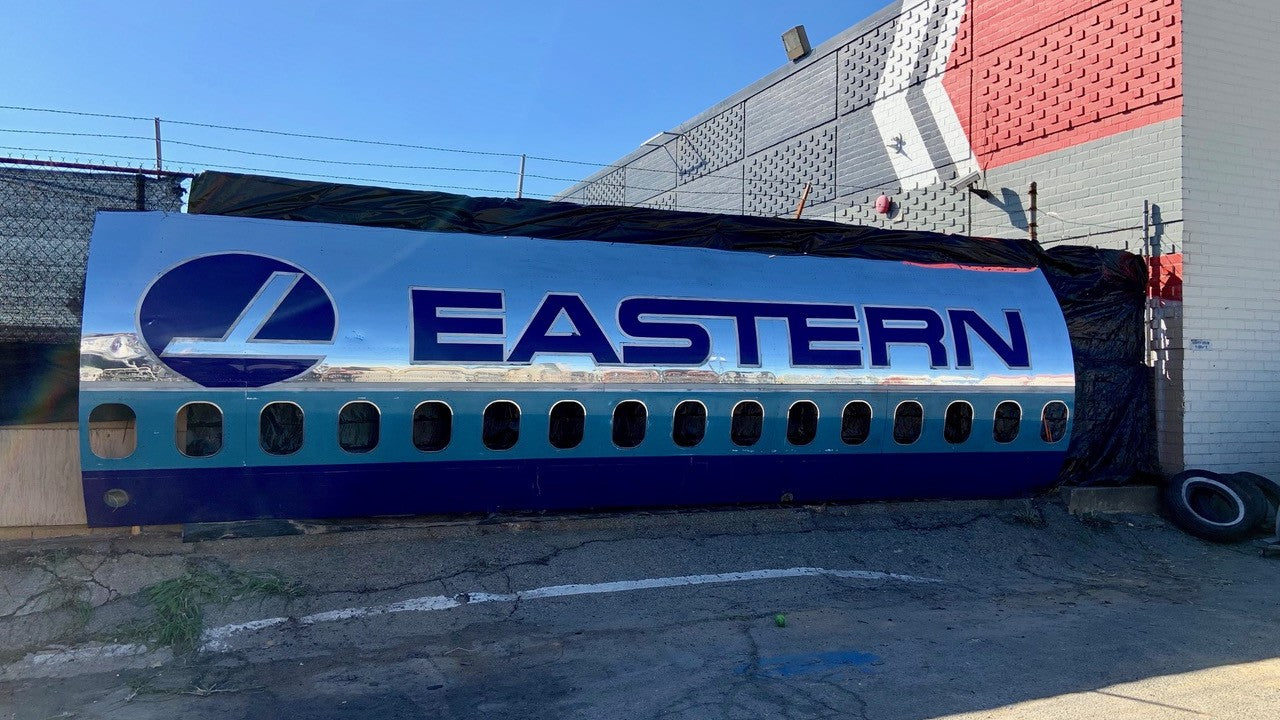
The first Douglas DC-9 took to the skies on February 25, 1965 from Long Beach, California, and became one of the most popular and successful passenger jets for several reasons. N8990E was one of 81 that powered the Eastern Air Lines fleet and helped make it one of the most successful and dominant airlines for decades. Let’s take a look at why this plane was so unique, and why Eastern, among other carriers, chose it as their workhorse. Add one of these Eastern Air Lines DC-9 PlaneTags to your collection.

Eastern Air Lines DC-9-31; N8990E, May 1987 flickr photo by Aero Icarus shared under a Creative Commons (BY-NC-SA 2.0) license
As commercial airline travel became more popular in the post-World War II era, there became a growing need for aircraft both economical and built for frequent short-range flights to airports with small runways. In need of a small to medium plane to complement the long-range DC-8, Douglas Aircraft Company began working on several different designs, none of which garnered much interest until the DC-9 was introduced. Unlike its competitors such as the Boeing 727 which borrowed elements from its predecessors, this was an all new design. Its unique characteristics made this the perfect solution for the industry, and for Eastern Air Lines.

Used by permission of photographer Martin Laycock
EAL got its start in 1929 when Clement Keys bought a small Philadelphia-based airline which had been operating as Pitcairn Aviation since 1927. In 1930 the airline was changed to Eastern Air Transport and from there expanded its reach to Atlanta, Miami, Boston and Richmond, Virginia. Led by World War I flying ace Eddie Rickenbacker, initially as general manager and eventually as owner, it focused on the East Coast and quickly gained a near monopoly of the New York-to-Florida route, and dominated the market for decades.

Douglas DC-3-201 ‘N18124 / 244’ flickr photo by HawkeyeUK shared under a Creative Commons (BY-SA 2.0) license
Aviation is proof that given the will, we have the capacity to achieve the impossible. - Eddie Rickenbacker, WW I flying ace and manager/owner of Eastern Air Lines
With its innovative mail delivery service in the 1930’s, acquisitions and its World War II support transport, the airline continued its rapid growth. It continued expanding its fleet and routes in the 1950’s, notably to Canada with its purchase of Colonial Airlines, and to Mexico. It began using DC-9’s in 1965 and continued flying them until closing its doors in 1991. By 1971, it had begun flying coast-to-coast, as well as to the Caribbean with its acquisition of Caribair, a Puerto Rican airline, which boasted several, including N8990E.

Eastern Air Lines Atlanta map, 1980, flickr photo by airbus777 shared under a Creative Commons (BY) license

By Dmitry Denisenkov (Canwolf) - Own work, CC BY 2.5, Link
Some of the unique features included its five across seating, T-tail, wing style and its noted rear-mounted turbofan engines which lowered takeoff and approach speeds and contributed to its ease of landing at smaller airports. During its pinnacle, a pilot could expect to both take off and land five or six times a day. This frequency allowed both pilots and mechanics to have a greater understanding of the equipment in a way that had not been previously known. Many former pilots have fondly remarked that this was the last plane they flew with analog dials, and that no two flew exactly the same. Keep reading about DC-9.

By Cory W. Watts from Madison, Wisconsin, United States of America - The DC-9 Main Cabin, CC BY-SA 2.0, Link
When I look up and see the sun shining on the patch of white clouds up in the blue, I begin to think how it would feel to be up somewhere above it winging swiftly through the clear air, watching the earth below, and the men on it, no bigger than ants. - Eddie Rickenbacker, WW I flying ace and manager/owner of Eastern Air Lines

N8990E was rolled off the assembly line in Long Beach, CA in 1967. Originally registered as N939PR, it was delivered to Caribair in 1967. EAL bought Caribair in 1971 and eventually in May 1973, this plane was registered as N8990E. It flew as part of the EAL fleet, along with about 80 other 9-30’s, until 1991.

Due to management/labor and financial woes, EAL experienced losses throughout the 1980’s, with a debt of $3.5 billion in 1985. It was then bought by Frank Lorenzo for $612 million, who then used the beleaguered airline and its assets to boost his other properties.
During its last full year of business in 1990, it flew 16.50 million passengers through its Atlanta hub (74.7% of their total passenger base), with its DC 9 fleet carrying more than half of the total number of flights with around 390 per day. Despite this, it ceased operations in January 1991. N8990E was then withdrawn from use, also in January 1991, then broken up in 1994 in San Bernardino (MHV). It was rescued from destruction by MotoArt, and its distinctive blue, white and silver skin has been preserved in the form of PlaneTags.


The fuselage was transported to MotoArt Studios in Torrance, CA. As part of the restoration process, the airplane skin - or outer layer - is polished and returned to its former beauty. The original paint is meticulously preserved, as are dings and dents and other imperfections. This makes each PlaneTag a one-of-a-kind piece of history.


Each limited edition PlaneTag is cut from the skin of N8990E and is available in a shiny silver, blue or combination of blue, white or silver and etched with Eastern DC-9 and are numbered from 1 through 5000. They come with a sturdy metal loop and a beautifully designed display card and are suitable for collecting or using as a keychain or luggage tag. They make a great gift or collectable for the avgeek or pilot in your life, or for anyone who loves history and airplanes. Although both EAL and the DC-9-31 no longer soar through the skies, they will continue to be remembered for their significant role in commercial flight and aviation history.
Since the Eastern Air Lines DC-9 first introduction as PlaneTags in February 2019, MotoArt has introduced other great DC-9s, including:
Northwest® DC-9 (N920RW)
A familiar Midwest workhorse from Northwest’s extensive DC-9 fleet.
TWA DC-9-31 (N976Z)
A classic short-haul jet from one of America’s most iconic airlines.
Aero California DC-9 (XA-SWH)
A rare international DC-9 with a unique regional airline story.

Life Aboard USS Midway: The Doors That Held It All Together
The newest Midway PlaneTags are made from authentic USS Midway watertight doors, including doors such as 2-75-6.
Located below deck, these doors connected the spaces where sailors lived and worked. Layers of paint and wear reflect years of daily use.
Open. Closed. Passed through thousands of times.
Through MotoArt’s partnership with the USS Midway Museum, this material has been preserved and given a second life.
American Airlines MD-82 N470AA: The Super 80 That Defined an Era
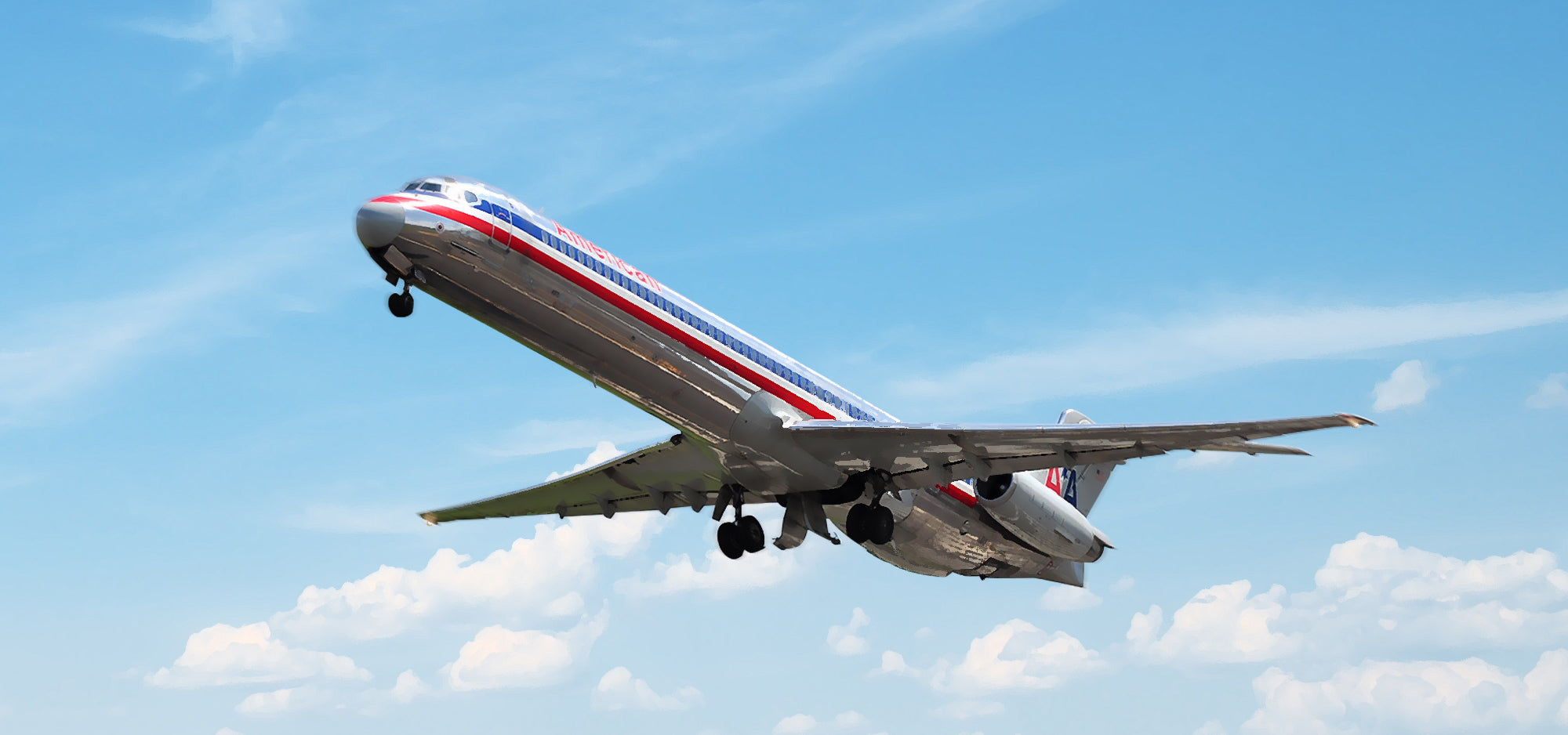
As American Airlines approaches its 100-year anniversary in 2026, it is a good time to look back at the aircraft that supported its growth over the decades.
One of the most recognizable of those aircraft was the McDonnell Douglas MD-80, often referred to as the “Super 80.” While it was not the newest aircraft by the end of its service life, it played a central role in domestic air travel in the United States.
MD-82 N470AA is one of those aircraft. Delivered in 1988 and flown for nearly 28 years, it represents a period when the MD-80 was a consistent and familiar part of the flying experience.
Bristol Beaufort A9-535: A Torpedo Bomber from the Pacific War
Share:
"Flagship Tulsa": A Legacy of Beauty and Innovation
MotoArt Transforms A 747 Cowling Into A Grand Chandelier