

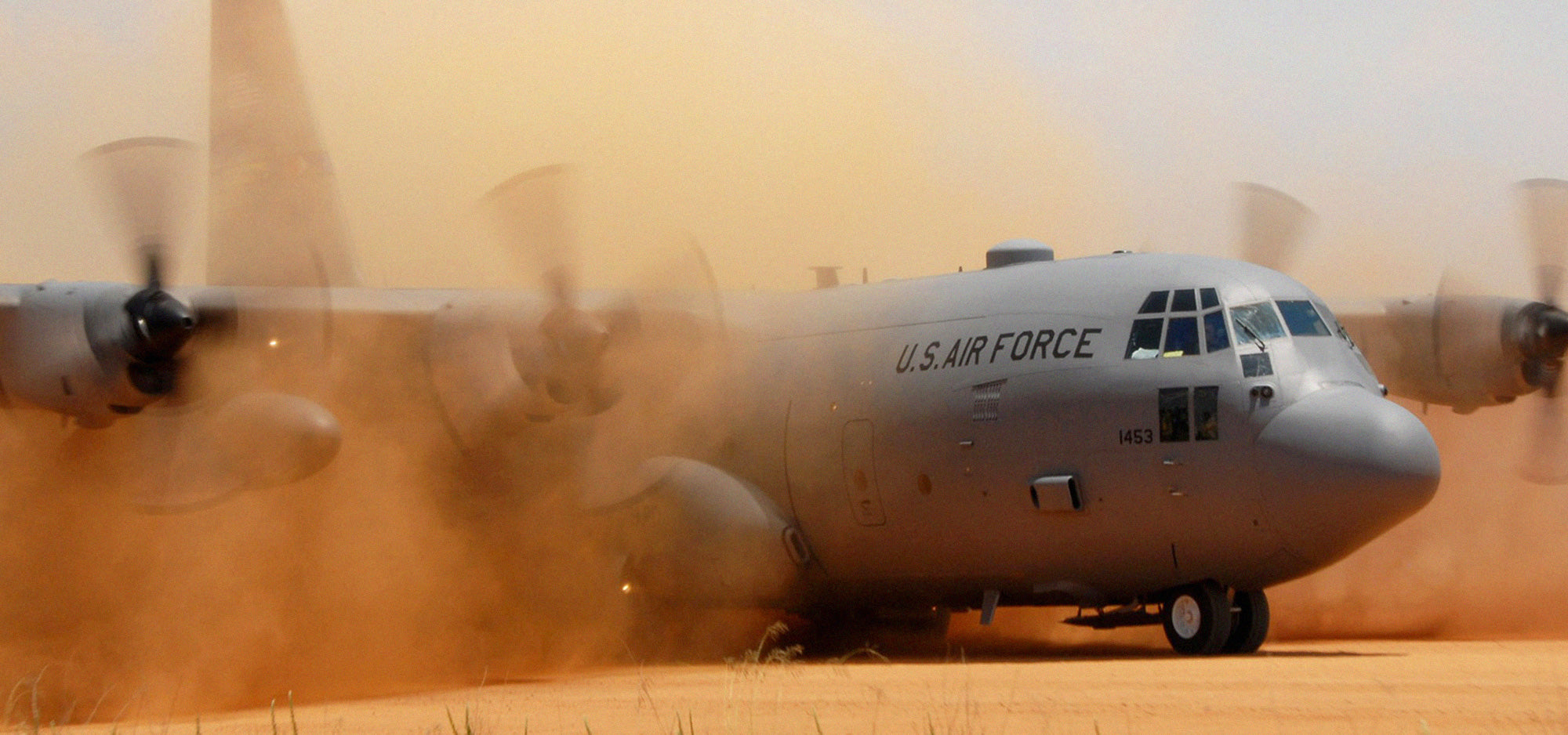
For more than 70 years, the Lockheed C-130 Hercules has carried troops, supplies, rescue crews, humanitarian aid, firefighting equipment, and even scientific research teams around the world. Few aircraft have served in as many roles, in as many places, or for as long as the C-130 Hercules.
Built to operate where other aircraft could not, the Hercules became one of the most versatile and dependable military aircraft ever created. Its reputation for rugged performance and adaptability turned it into a global aviation icon, with more than 70 countries operating variants of the aircraft over the decades.
Today, the legacy of the Hercules continues through authentic C-130 Coasters, made from real retired aircraft aluminum and transformed into functional aviation collectibles.
What Is the C-130 Hercules?

By SrA Eric Palmer - http://www.defenseimagery.mil/imageRetrieve.action?guid=dc763d2f6333ad7ccc7edfeb95328560290bcc42&t=2, Public Domain, Link
The Lockheed C-130 Hercules is a four-engine turboprop military transport aircraft first introduced in the 1950s. Designed during the Cold War for the United States Air Force, the aircraft was created to solve a growing need for a cargo plane capable of carrying troops and equipment into difficult environments.
Unlike large strategic transports that required long paved runways, the C-130 was designed for flexibility. It could operate from short, rough, and unprepared airstrips while carrying heavy payloads across long distances. That combination made it invaluable in both military and humanitarian operations.

Photo courtesy of Lockheed Martin
The first flight of the Hercules took place in 1954, and remarkably, the aircraft remains in production today with the C-130J. Few aircraft in aviation history have achieved that kind of longevity.
C-130 At A Glance

C-130 Characteristics:
Manufacturer: Lockheed-Martin Aeronautics Company
Model: Lockheed C-130 Hercules
Crew: 5 (two pilots, navigator, flight engineer, loadmaster)
Length: 97 ft 9 in
Wingspan: 132 ft 7 in
Height: 38 ft 10 in
Cargo Capacity: Up to 42,000 lb of cargo or 90 combat troops / 64 paratroopers / 72 litters
C-130 Performance:
Cruise Speed: 366 mph
Range: 1,208 mi
Service Ceiling: 23,000 ft with 42,000 lb payload
Empty Weight: 75,800 lb
Max Takeoff Weight: 155,000 lb
Rate of Climb: 1,830 ft/min
Engines: 4x Allison T56-A-15 turboprops with 4-bladed Hamilton Standard propellers
Why the C-130 Became Legendary
The C-130 earned its reputation by doing jobs that other aircraft simply could not. Its high-mounted wings, durable landing gear, rear loading ramp, and powerful turboprop engines allowed it to transport cargo into remote and dangerous locations around the world. Over time, the Hercules became known as one of the most reliable military workhorses ever built.
The aircraft has served in nearly every type of mission imaginable, including:
-
Troop and cargo transport
-
Medical evacuation missions
-
Search and rescue operations
-
Disaster relief and humanitarian aid
-
Aerial firefighting
-
Special operations support
-
Airborne assault and paratrooper drops
-
Weather reconnaissance
-
Aerial refueling
-
Maritime patrol
Whether supporting combat operations overseas or delivering supplies after hurricanes and natural disasters, the C-130 proved it could adapt to almost any mission.

Photo courtesy of Lockheed Martin
The Hercules Around the World
One reason the C-130 became so successful is its versatility across different operators and environments. Variants of the aircraft have been used by the United States Air Force, Navy, Marines, Coast Guard, NASA, and air forces around the world. Some Hercules aircraft were configured for combat support. Others were transformed into flying hospitals, firefighting aircraft, or specialized rescue platforms.

Egyptian Air Force C-130H - By Aktug Ates - Gallery page | Photo, GFDL 1.2, Link

An AC-130U releasing flares - By Senior Airman Julianne Showalter - Photo, Public Domain, Link
Perhaps the most famous variant is the AC-130 gunship, heavily armed and used for close air support missions. Other variants, like the HC-130, became known for search and rescue and humanitarian operations. Read more about the HC-130 here: HC-130H Hercules: A Legacy Of Strength And Versatility.

The aircraft also became closely associated with tactical airlift missions, where crews operated in harsh conditions and challenging environments that demanded exceptional skill and reliability.
Why Aviation Enthusiasts Love the C-130

Lockheed C-130 Hercules field back to the mountains flickr photo by kitmasterbloke shared under a Creative Commons (BY 2.0) license
For aviation enthusiasts, the Hercules represents a rare combination of strength, longevity, and practicality. It is not the fastest aircraft ever built, nor the most technologically advanced. Instead, the C-130 became legendary because it consistently performed some of the toughest jobs in aviation for generation after generation.

150518-M-BZ307-055 flickr photo by U.S. Department of Defense Current Photos shared as a Public Domain United States Government Work (PD)
The sound of its turboprop engines, the sight of its large cargo ramp opening, and its unmistakable silhouette have made the Hercules instantly recognizable to military personnel, aviation fans, and aircraft crews around the world. Even decades after its introduction, the aircraft remains one of the most respected transports in aviation history.

Best of the U.S. Air Force - Department of Defense Image Collection - September 1998 flickr photo by expertinfantry shared under a Creative Commons (BY 2.0) license
A 25-Year Connection to the Hercules
MotoArt’s connection to the Lockheed C-130 Hercules goes back decades.


For more than 25 years, MotoArt founder Dave Hall has collected retired C-130 Hercules flaps and aircraft components, preserving material from one of the most respected transport aircraft ever built. Over the years, those massive Hercules flaps have been transformed into dozens of custom MotoArt conference tables and aviation furniture pieces used in homes, offices, museums, and aviation spaces around the world.


As MotoArt continued working with authentic Hercules material over the years, smaller sections of retired aircraft aluminum were carefully set aside and preserved for future projects.
Now, some of that material has been transformed into authentic C-130 Coasters, functional aviation collectibles that continue the legacy of these historic aircraft in an entirely new form.
From Retired Aircraft to Authentic C-130 Coasters

After decades of preserving and working with authentic Hercules aircraft material, MotoArt found a new way to continue the story of the C-130. These authentic coasters are made from retired C-130 aircraft aluminum sourced from multiple Hercules airframes, each carrying unique markings, wear, rivet patterns, and character shaped by years of service. No two are exactly alike.


A Functional Piece of Aviation History
The C-130 Hercules has spent decades supporting missions across the globe, serving in combat zones, disaster areas, remote outposts, and humanitarian operations alike. Its story is one of reliability, adaptability, and endurance.

Now, through authentic C-130 Coasters, part of that legacy lives on in a new form, preserving the history of an aircraft that truly could do almost anything.
Explore More Military Aviation Collectibles
If you enjoy the history of the C-130 Hercules, explore more authentic aviation collectibles and PlaneTags made from legendary military aircraft from the Cold War Collection.
Authentic Aircraft Coasters for Aviation Enthusiasts
MotoArt Aircraft Coasters are made from authentic retired aircraft aluminum, transforming aviation history into functional collectibles for your home, office, hangar, or bar. Each coaster carries unique markings, rivets, paint patterns, and wear from the aircraft it came from, making every set one of a kind.

From military aircraft like the Lockheed C-130 Hercules and Boeing B-52 Stratofortress to commercial airliners and legendary naval aircraft, MotoArt’s coaster collection gives aviation enthusiasts a unique way to own and display real aircraft material in everyday life.
Explore the full Aircraft Coaster Collection to discover more aviation-inspired coasters made from authentic retired aircraft.

Share:
From Liftoff to Legacy: The Story of the Space Shuttle’s Solid Rocket Boosters
Grumman OV-1D Mohawk: The U.S. Army's Battlefield Eye in the Sky