

USS Midway (CV-41): A Brief Historical View from the Flight Deck
By Brian Engleman
USS Midway Museum Docent and Airwing Volunteer
To help provide deeper historical context for our USS Midway project, we invited Brian Engleman, a docent at the USS Midway Museum and a member of the museum’s Airwing group, to share an overview of the ship’s remarkable service history.
In addition to his work educating visitors aboard Midway, Brian is part of the team that preserves and restores the aircraft on display aboard the USS Midway Museum. What follows is a summary of USS Midway’s construction, technological evolution, combat service, and transformation into the world’s most visited floating museum. Brian draws this information from an incredible wealth of knowledge aboard the Midway, including the Historian, Curatorial, Training and Docent volunteers and staff.
History of the USS Midway (CV-41)
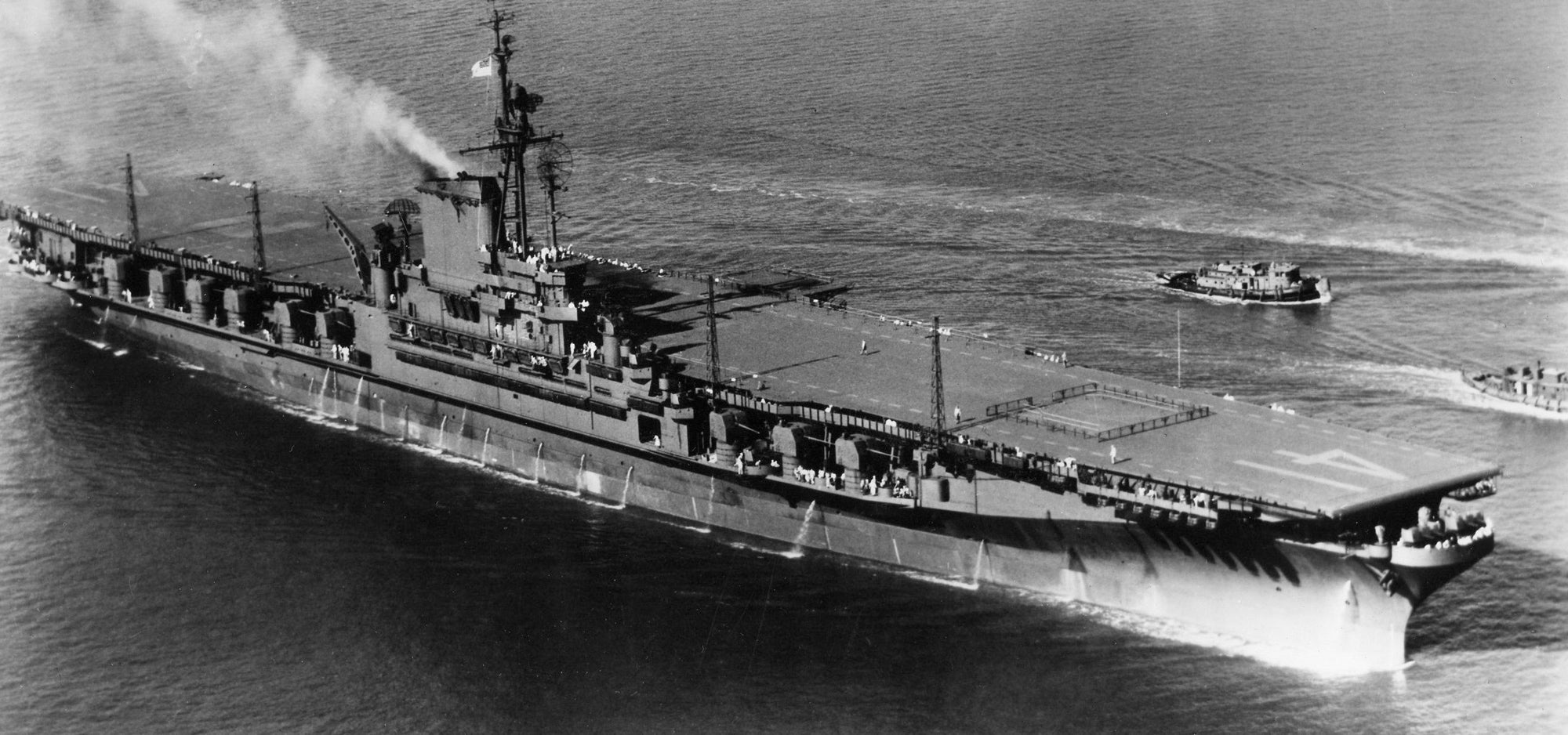
The USS Midway was the longest-serving aircraft carrier of the 20th century. Named after the climactic Battle of Midway of June 1942, Midway was built in Virginia by Newport News Shipbuilding Company in just 17 months. It narrowly missed service in World War II, being commissioned on September 10, 1945, only nine days after the war ended.

At the time of commissioning, Midway was the largest ship in the world and the first of a three-ship class of large aircraft carriers featuring an armored flight deck and a powerful air group of around 120 aircraft. All previous U.S. aircraft carriers had wooden flight decks. These ships were purpose-built carriers and did not reuse hulls intended for battleships.

The Midway-class carriers were originally built with straight flight decks. The second ship in the class, initially designated CVB-42, was to be named USS Coral Sea (honoring the battle that kept Japanese forces out of Australia). Following the death of President Franklin D. Roosevelt on April 12, 1945, that ship was renamed USS Franklin D. Roosevelt. The third ship, CVB-43, built in the same dry dock as the Midway upon Midway’s completion, was then given the name USS Coral Sea. USS Franklin D. Roosevelt was decommissioned in 1977, while USS Coral Sea was decommissioned in 1990.
Early Operations and Cold War Innovation
Midway commenced its first at-sea operations in October 1945. Just ten days after departing Norfolk Navy Yard, it landed its first aircraft aboard: an F4U-4 Corsair from Carrier Air Group 74.
From the beginning of its service, Midway played a key role in Cold War innovation. In 1946, it became the first American aircraft carrier to operate in midwinter sub-Arctic conditions during Operation Frostbite, developing new flight deck procedures in extreme cold.
In 1947, Midway became the first ship at sea to launch a large rocket, and the only ship to ever launch a captured German V-2 rocket during Operation Sandy, marking the dawn of naval missile warfare. Two years later, it demonstrated that carrier-based aircraft were capable of delivering atomic weapons.

Modernization and the Jet Age
After ten years of Atlantic Fleet service and seven deployments to European waters, Midway completed a round-the-world cruise in 1955 and arrived on the West Coast for major modernization. These upgrades were driven by the Navy’s transition to jet aircraft and included the addition of an enlarged, angled flight deck, steam catapults, improved arresting gear, jet blast deflectors, relocated aircraft elevators, and a mirrored landing aid system.

In 1963, Midway achieved another aviation milestone when Naval Air Test Center pilots conducted the first successful “hands-off” automatic carrier landings using the Bell SPN-10 Automatic Carrier Landing System. These landings marked a significant advancement in carrier aviation technology.
Vietnam War and Forward Deployment
Midway’s first combat deployment occurred in 1965 during the Vietnam War. Aircraft from the carrier shot down three MiG fighters, including the first air-to-air kill of the conflict. Despite heavy combat operations, the ship underwent another extensive modernization between 1966 and 1970, when the major upgrades from the previous decade were improved upon (including an enlarged flight deck, to the current 4.02 acres- double the ship’s original flight deck area).
Following its return to service, Midway completed two additional combat deployments to Vietnam. In 1973, its pilots shot down the final MiG of the Vietnam War. That same year, Midway became the first U.S. aircraft carrier permanently home-ported in a foreign country, Yokosuka, Japan, where it remained for 17 of the final 20 years of service.
Humanitarian Missions and Final Service

During the fall of Saigon in April 1975, Midway led Operation Frequent Wind, a short fourth deployment to Vietnam, serving as a floating base for helicopter evacuations that rescued thousands of refugees.
In 1990, Midway deployed to the Persian Gulf during Operation Desert Storm, launching more than 3,000 combat missions with no losses and serving as the flagship for naval air forces in the region.
Midway's final operational mission was the evacuation of 1,800 civilians from Clark Air Force Base and Naval Station Subic Bay in the Philippines following the eruption of Mount Pinatubo. This operation, Fiery Vigil, occurred only two months after the ship returned from Desert Storm in 1991.
From Warship to Museum

USS Midway was decommissioned in San Diego on April 11, 1992, and spent more than a decade in the inactive ship fleet in Bremerton, WA. In 2003, the ship was donated to the San Diego Aircraft Carrier Museum and towed to California. After extensive preparation in Oakland, Midway made a triumphant return to San Diego on January 5, 2004 and opened as a museum on June 7, 2004.
Since then, USS Midway has welcomed more than 21 million visitors and today stands as the most visited floating museum in the world.
Closing Notes and Historical Clarifications
Contrary to popular myth, Midway-class carriers were not built on unfinished Montana-class battleship hulls, nor were they originally intended to be battleships. While some engineering concepts were shared, Midway-class carriers were purpose-designed as aircraft carriers from the outset.
The name “Midway” also carries a complex lineage within the U.S. Navy, having been assigned to multiple ships prior to CV-41. Ultimately, the name was reserved for the carrier that would become one of the most important and enduring symbols of naval aviation in the 20th century.
Thank you from MotoArt PlaneTags
We are grateful to Brian Engleman, USS Midway Museum docent and Airwing volunteer, for sharing this historical overview and for the hands-on work he and the Airwing team do to preserve the aircraft and stories that define Midway’s legacy. Readers interested in how this history informs our current USS Midway preservation project can explore our overview of the ship’s legacy.
Thank you USS Midway Museum for all photos in this article.
Share:
Press Release: MotoArt to Preserve USS Midway Legacy Through Special PlaneTags Project
Press Release: Authentic USS Midway Propeller Screw Material Released to Public for the First Time