

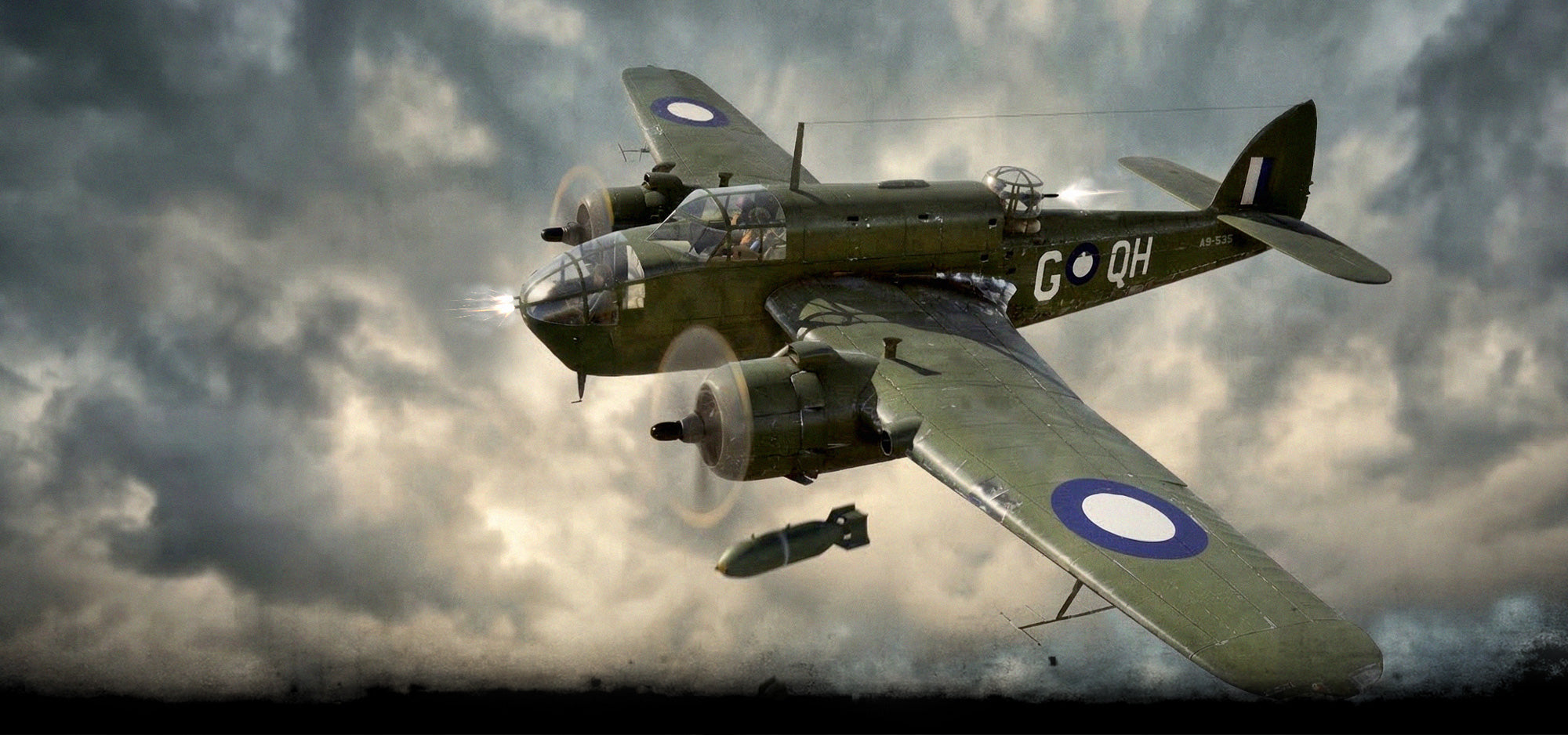
During the Second World War, control of the seas often depended on aircraft capable of striking enemy ships far from shore. One of the most important aircraft developed for this role was the Bristol Beaufort, a twin-engine torpedo bomber that served Allied forces across Europe, the Mediterranean, and the Pacific.
Among the many Beauforts that flew during the war was RAAF aircraft A9-535, built in Australia and flown in combat in the Southwest Pacific. After sustaining damage during operations in New Guinea in 1944, the aircraft was forced down and left behind. More than eighty years later, material recovered from that aircraft has been preserved, giving collectors a chance to hold a piece of this rare wartime aircraft.
The Bristol Beaufort: Britain’s Torpedo Bomber
The Bristol Beaufort was designed in the late 1930s by the Bristol Aeroplane Company as a maritime strike aircraft. Its first flight took place in 1938, and it soon entered service with the Royal Air Force as tensions in Europe moved toward war.

Photo courtesy of Richard E Flagg, UK Airfields. Used with permission.
The Beaufort was built for long-range coastal operations and typically carried a crew of four consisting of a pilot, navigator, wireless operator, and gunner. Powered by two engines, the aircraft could carry an 18-inch torpedo or a load of bombs depending on the mission.
Its primary role was attacking enemy shipping. These missions required crews to fly low and straight toward their target in order to release a torpedo accurately. Ships were heavily defended by anti-aircraft guns, making torpedo runs some of the most dangerous missions of the war.
Despite the risks, Beaufort crews carried out thousands of maritime strike missions. The aircraft was also used for reconnaissance, maritime patrol, mine laying, and ground attack operations.
Australia Builds the Beaufort
As the war expanded across the Pacific, the need for aircraft grew rapidly. Britain could no longer supply enough aircraft to Allied forces operating far from Europe, and Australia responded by launching one of the largest aircraft manufacturing efforts in its history.
Production of the Beaufort began at Fishermans Bend in Melbourne, where the Australian government established major manufacturing facilities under the Department of Aircraft Production. Between 1941 and 1944, more than 700 Beauforts were built in Australia.

Photo courtesy of Australian War Memorial, public domain.
The Australian version, known as the Beaufort Mk VIII, differed slightly from the British model. Instead of the original Taurus engines, Australian Beauforts were powered by reliable Pratt & Whitney R-1830 Twin Wasp radial engines. The aircraft were also adapted for the long over-water missions and tropical conditions common in the Pacific theater.
These locally built aircraft became an important part of the Royal Australian Air Force’s strike capability during the war.
Bristol Beaufort Mk VIII Specifications

Bristol Beaufort Characteristics:
- Manufacturer: Bristol Aeroplane Company / Department of Aircraft Production
- Model: Bristol Beaufort Mk VIII
- Serial Number: A9-535
- Crew: 4 (pilot, navigator/bomb aimer, radio operator, gunner)
- Wingspan: 57 ft 10 in
- Length: 44 ft 3 in
- Height: 14 ft 3 in
-
Armament: 8x .303 in machine guns (including dorsal turret guns and wing/beam guns); 1x aerial torpedo or up to 2,000 lb of bombs or depth charges
Bristol Beaufort Performance:
- Range: 1,450-1,600 mi
- Max Speed: ~260 mph (225 mph with torpedo)
- Service Ceiling: 18,000 ft
- Empty Weight: 14,070 lb
- Max Takeoff Weight: 22,083 lb
- Rate of Climb: 1,150 ft/min
- Engine: 2x Pratt & Whitney R-1830 Twin Wasp radial engines
No. 100 Squadron RAAF
Beaufort A9-535 served with No. 100 Squadron of the Royal Australian Air Force, a unit formed in February 1942 as Australia’s first dedicated torpedo bomber squadron.

Four Beaufort bomber aircraft of No. 100 Squadron RAAF By Harrison, John Thomas - Public Domain, Link
The squadron was established at RAAF Base Richmond in New South Wales, where crews trained to operate the Beaufort and practice the difficult techniques required for torpedo attacks. These missions required pilots to fly low and steady toward enemy ships in order to release their torpedoes accurately, often while under heavy anti-aircraft fire.
After completing training, the squadron deployed north as Allied forces fought to halt Japanese advances across the Pacific. From forward bases in New Guinea and the surrounding region, No. 100 Squadron flew maritime strike missions against Japanese shipping, coastal installations, and supply routes supporting enemy forces in the theater.

100 Squadron aircrew and ground staff beside DAP Beaufort A9-557, Tadji, New Guinea, c. 1944. Courtesy of Australian War Memorial, public domain.
These operations were critical to disrupting Japanese logistics. By attacking transport ships and coastal targets, Beaufort crews helped weaken the supply lines that supported Japanese operations across New Guinea and the surrounding islands.
Like many Beaufort units, the squadron flew long missions over open ocean and hostile territory, often at low altitude. The aircraft’s ability to carry torpedoes or bombs made it a versatile strike platform during some of the most intense fighting in the Pacific theater.
For readers interested in learning more about the Royal Australian Air Force Beaufort squadrons and the crews who flew them, the historical publication Song of the Beauforts provides a detailed account of their operations during the war. Read it here.
The Story of Beaufort A9-535
Bristol Beaufort A9-535 was built in Melbourne as part of Australia’s wartime aircraft production program and assigned to No. 100 Squadron RAAF, a torpedo bomber unit operating across the Southwest Pacific.
On July 10, 1944, after sustaining damage during combat operations in New Guinea, the aircraft was forced to make an emergency landing at Tadji Airfield, an Allied base supporting operations along the northern coast of the island. Although the crew survived the landing, the aircraft itself was too badly damaged to return to service.

Like many aircraft operating from forward wartime airfields, A9-535 was stripped of usable components shortly afterward. Engines, instruments, and other equipment were removed to keep operational aircraft flying, and the remaining structure was moved to a salvage area near the airfield. Wartime records indicate the aircraft was converted to components in August 1944, leaving only the airframe behind.
By the later stages of the war, Tadji had become a busy Allied air base with multiple runways carved from the jungle. Aircraft that could not be repaired were pushed to the edges of the airfield and gathered in salvage areas maintained by repair and recovery units. Over time these areas became informal wartime boneyards, where damaged aircraft from different squadrons sat in rows after being stripped of parts.

Photo courtesy of Pacific Wrecks.
For decades after the war, the remains of these aircraft remained scattered around the former airfield as relics of the Pacific air war.
During the 1970s, portions of Beaufort A9-535 were recovered from Tadji during one of the early efforts to salvage historic aircraft from abandoned Pacific battlefields. The aircraft may have been transported to the United States for David Tallichet’s aviation preservation organization, Yesterday’s Air Force, based in Chino, California. Tallichet was one of the pioneers of warbird preservation and helped recover many aircraft that might otherwise have disappeared entirely.
A portion of the recovered material from A9-535 was later provided to MotoArt by Pima Air & Space Museum, where it has been carefully transformed into PlaneTags. Today, those pieces preserve the legacy of a wartime aircraft that once flew combat missions across the Pacific during World War II.
From Wartime Aircraft to PlaneTags


Each Bristol Beaufort PlaneTag is crafted from authentic aircraft aluminum and retains the marks and character of the original material. The result is a small but meaningful connection to an aircraft that once flew combat missions over the Pacific during the Second World War.


Collecting a Piece of History
PlaneTags made from Beaufort A9-535 represent more than a rare aircraft. They carry the story of Australia’s wartime aircraft production, the dangerous torpedo missions flown by RAAF crews, and the long journey of this aircraft from wartime service to modern preservation.
More than eighty years after its final mission, the legacy of this Beaufort continues through museums, historians, and collectors who value the history these aircraft represent. Beaufort PlaneTags will go on sale Thursday, March 19, 2026 at 12 PM Pacific time.
WWII Bomber PlaneTags
Collectors interested in the Bristol Beaufort may also enjoy exploring other historic aircraft preserved as PlaneTags. Our WWII bomber collection features aircraft that served across the Pacific and European theaters during the Second World War, each crafted from authentic aircraft aluminum and preserving the story of the aircraft that flew them.
Explore more historic aircraft here: Shop WWII Bomber PlaneTags

Share:
Sikorsky H-5 Dragonfly: The Navy’s First Fleet Helicopter
American Airlines MD-82 N470AA: The Super 80 That Defined an Era