

- by Dianna Lopez
Grumman OV-1D Mohawk: The U.S. Army's Battlefield Eye in the Sky
- by Dianna Lopez
This site uses cookies for better user experience and analytics.
Hidden behind enemy lines, flying in darkness and bad weather, the OV-1D Mohawk gave U.S. Army commanders something they desperately needed: the ability to see what the enemy was doing before the enemy knew they were being watched.
The Grumman OV-1 Mohawk was one of the most capable and technologically advanced reconnaissance aircraft operated by the U.S. Army during the Cold War. Designed to gather intelligence close to the front lines, the Mohawk combined short takeoff and landing performance with sophisticated sensor systems that allowed it to detect and monitor activity on the ground in nearly any weather conditions.
At a time when battlefield commanders increasingly relied on timely intelligence, the Mohawk provided information that could not always be obtained through traditional observation methods. Equipped with infrared sensors, cameras, and side-looking airborne radar systems, it helped military planners track troop movements, monitor supply routes, and identify potential threats day or night.
Over a service life that spanned more than three decades, the Mohawk flew missions in Vietnam, served with Army intelligence units in Europe during the height of the Cold War, and helped pioneer many of the airborne surveillance techniques that later became standard throughout the military.
Today, PlaneTags made from OV-1D Mohawk serial number 62-5902 preserve the legacy of an aircraft that played a critical role in military reconnaissance during a period of rapid technological change.

By U.S. Air Force - commons.wikimedia, Public Domain, Link
The OV-1 Mohawk was developed during the 1950s as a joint Army and Marine Corps program intended to create a dedicated battlefield observation and reconnaissance aircraft. Grumman Aircraft Engineering Corporation was selected to design the aircraft, and the prototype first flew on April 14, 1959.
Although the Marine Corps eventually withdrew from the program, the Army continued development and fielded the Mohawk as a specialized intelligence-gathering platform. Unlike larger strategic reconnaissance aircraft that operated far behind enemy lines, the Mohawk was designed to work directly in support of ground forces.
The aircraft featured a distinctive twin-engine turboprop configuration with a high-mounted wing and twin-tail arrangement. Its design allowed it to operate from short and unimproved airstrips closer to combat operations. This forward deployment capability enabled crews to quickly respond to changing battlefield conditions and deliver intelligence to commanders with minimal delay.
A two-person crew occupied the cockpit, with the pilot and mission operator working together to collect and analyze reconnaissance data during flight.

Manufacturer: Grumman
Model: OV-1D Mohawk
S/N: 62-5902
Crew: 2 (pilot and observer/sensor operator)
Mission: Tactical reconnaissance and battlefield surveillance
Sensors: Side-Looking Airborne Radar (SLAR), infrared sensors, and photographic reconnaissance equipment
Wing Span: 48 ft 0 in
Length: 41 ft 0 in
Height: 12 ft 8 in
Range: 944 mi
Max Speed: 305 mph
Ceiling: 25,000 ft
Empty Weight: 12,054 lb
Maximum Takeoff Weight: 18,109 lb
Rate of Climb: 3,466 ft per minute
Engine: 2x Lycoming T53-L-701 turboprops
The Mohawk was designed around its reconnaissance mission. Rather than focusing on speed or heavy armament, Grumman built the aircraft to carry advanced surveillance equipment that was uncommon for tactical aircraft of its era. As the aircraft evolved through several variants, it gained increasingly sophisticated sensor systems capable of detecting and recording activity on the ground.

Grumman OV-1D Mohawk S/N: 62-5889 - N134GM, Cavanaugh Flight Museum flickr photo by AV8PIX Christopher Ebdon shared under a Creative Commons (BY-NC-SA 2.0) license
Among the most important technologies carried by later Mohawk models were infrared sensors and Side-Looking Airborne Radar (SLAR). These systems allowed crews to locate vehicles, troop concentrations, and other targets even in darkness, poor weather, or through cloud cover.
The OV-1D variant represented the most advanced operational version of the aircraft. It combined infrared detection systems with upgraded radar equipment, providing commanders with valuable intelligence regardless of environmental conditions.
Many of the surveillance concepts demonstrated by the Mohawk would later influence modern intelligence, surveillance, and reconnaissance aircraft. In many ways, the aircraft helped bridge the gap between traditional visual observation and the sophisticated sensor platforms used today.
The OV-1 Mohawk occupies a unique place in American military aviation history. Following the 1948 Key West Agreement, most fixed-wing combat aircraft became the responsibility of the newly independent U.S. Air Force. The Army largely focused on helicopters and limited fixed-wing aviation assets.

Grumman OV-1B Mohawk ‘25889’ (N134GM) flickr photo by HawkeyeUK shared under a Creative Commons (BY-SA 2.0) license
The Mohawk was one of the notable exceptions. Designed specifically to support Army ground forces, it provided battlefield reconnaissance and intelligence gathering capabilities that commanders could control directly. This made the Mohawk one of the few fixed-wing aircraft types operated extensively by the U.S. Army during the Cold War.
Its success demonstrated the value of dedicated tactical reconnaissance aircraft and helped shape future Army intelligence and surveillance programs.
The OV-1 Mohawk first entered operational service in the early 1960s, just as the United States was increasing its involvement in Southeast Asia. The aircraft arrived in Vietnam in 1962 and quickly demonstrated the value of dedicated airborne reconnaissance in a conflict where information was often as important as firepower.
Unlike conventional wars with clearly defined front lines, the Vietnam War required military commanders to monitor enemy movements across large areas of difficult terrain. Dense jungle, mountainous regions, and limited visibility often made ground observation challenging. The Mohawk helped fill this gap by providing aerial surveillance and reconnaissance directly to Army units operating in the field.
Throughout the conflict, Mohawk crews conducted visual reconnaissance, photographic intelligence gathering, radar surveillance, and infrared detection missions. These flights helped identify troop movements, locate supply routes, and monitor areas of strategic importance. The aircraft's ability to operate from relatively short and unimproved airfields allowed it to work closer to combat operations than many larger reconnaissance aircraft.

By Mike Freer - Touchdown-aviation - Gallery page | Photo , GFDL 1.2, Link
One of the Mohawk's most important contributions was its use of advanced sensors. Aircraft equipped with Side-Looking Airborne Radar (SLAR) could scan large areas of terrain and detect activity even when visibility was poor. Infrared systems provided another advantage by identifying heat signatures that could reveal vehicles, camps, or personnel operating at night.
These capabilities proved particularly valuable in monitoring portions of the Ho Chi Minh Trail, the extensive network of roads and pathways used to move troops and supplies from North Vietnam into South Vietnam. By combining radar, infrared sensors, and conventional photography, Mohawk crews provided intelligence that helped commanders better understand enemy movements and logistical activity.
The Vietnam War also served as a testing ground for many of the reconnaissance technologies that would later become standard throughout the military. The lessons learned from Mohawk operations helped shape future intelligence, surveillance, and reconnaissance programs and demonstrated the growing importance of sensor-equipped aircraft on the modern battlefield.

Photo courtesy of National Museum of U.S. Army
By the end of the conflict, the Mohawk had established itself as one of the Army's most effective airborne intelligence platforms. Its success in Vietnam validated the concept of tactical airborne surveillance and ensured the aircraft would continue serving for decades afterward.
Following its service in Vietnam, the Mohawk continued to play an important role during the Cold War. As tensions between NATO and the Warsaw Pact remained high throughout the 1970s and 1980s, military intelligence became a critical component of deterrence and defense planning.
In Europe, Mohawk units operated near some of the most heavily monitored borders in the world. Their mission was not to engage enemy forces directly but to gather information that could help commanders understand military activity and maintain situational awareness in a rapidly changing environment.

The aircraft's radar and infrared systems made it particularly well suited for this role. Whether flying during daylight hours or at night, Mohawk crews could collect intelligence across wide areas and provide timely information to military planners. These capabilities helped make the aircraft one of the Army's primary tactical reconnaissance platforms during the final decades of the Cold War.
By this period, many Mohawks had been upgraded to the OV-1D standard, which featured improved infrared systems and enhanced Side-Looking Airborne Radar equipment. These upgrades extended the aircraft's usefulness and allowed it to continue serving despite rapid advances in military technology.
The Mohawk remained a familiar sight at Army airfields throughout Europe and occasionally appeared at public aviation events, giving civilians a rare opportunity to see one of the Army's intelligence-gathering aircraft up close. Although much of its work occurred behind the scenes, the Mohawk played an important role in supporting NATO operations and maintaining readiness throughout the Cold War.
The retirement of the OV-1 Mohawk reflected broader changes in military reconnaissance and intelligence gathering. By the 1990s, advances in sensor technology, communications systems, and satellite surveillance had transformed how military commanders collected and analyzed information.

Celebrity Row - Grumman OV-1 Mohawk flickr photo by rocbolt shared under a Creative Commons (BY-NC 2.0) license
Many of the missions once performed by the Mohawk were assumed by newer platforms equipped with more sophisticated sensors and greater endurance. Aircraft such as the Beechcraft RC-12 Guardrail expanded the Army's intelligence-gathering capabilities, while improved satellite systems provided strategic surveillance on a scale that had not been possible when the Mohawk first entered service.
Perhaps the most significant change came with the rise of unmanned aerial vehicles. Systems such as the RQ-5 Hunter and later the MQ-1 Predator demonstrated that many reconnaissance missions could be performed without placing aircrews at risk. These aircraft offered longer loiter times and the ability to transmit intelligence directly to commanders in near real time.
While technology evolved, many of the concepts pioneered by the Mohawk remained relevant. The aircraft demonstrated the value of combining multiple sensor systems on a single platform and delivering timely intelligence directly to ground commanders. Those principles continue to guide modern intelligence, surveillance, and reconnaissance operations today.
The Mohawk may no longer fly operational missions, but its influence can still be seen in many of the surveillance aircraft and unmanned systems that followed.
The aircraft used to create these PlaneTags began its service life as OV-1B Mohawk serial number 62-5902. The OV-1B variant was equipped with Side-Looking Airborne Radar (SLAR), allowing crews to monitor large areas of terrain and detect activity beyond the capabilities of traditional visual observation.

62-5902 - By Anidaat - Own work, CC BY-SA 4.0, Link
As surveillance technology advanced, 62-5902 was later upgraded to the OV-1D configuration, the most capable operational version of the Mohawk. The conversion added improved infrared detection systems alongside upgraded radar equipment, giving the aircraft the ability to conduct reconnaissance missions during the day, at night, and in a wide range of weather conditions.
During its military career, 62-5902 served with the U.S. Army's 2nd Military Intelligence Battalion in Europe. The unit was responsible for providing tactical intelligence support to U.S. Army and NATO operations during the latter decades of the Cold War. Aircraft like the Mohawk played a key role in gathering information, monitoring activity, and supporting military planners during a period when intelligence collection was essential to maintaining readiness and deterrence.

Fairford 1987 Arrival Days - Arrival of OV-1D Mohawk 62-5902 - By Anidaat - Own work, CC BY-SA 4.0, Link
Although much of the Mohawk's work took place away from public view, 62-5902 made appearances at one of the world's most prominent military aviation events, the International Air Tattoo at RAF Fairford in England. The aircraft attended the show in both 1985 and 1987, providing aviation enthusiasts with an opportunity to see one of the Army's specialized reconnaissance aircraft up close.
By the late 1980s and early 1990s, new surveillance technologies were beginning to emerge. Improved satellites, advanced sensors, and the early development of unmanned aerial systems gradually reduced the need for dedicated tactical reconnaissance aircraft like the Mohawk. After more than three decades of service, the type was eventually retired from U.S. Army operations.
After its military service had ended, OV-1D Mohawk serial number 62-5902 followed a path that few could have predicted.


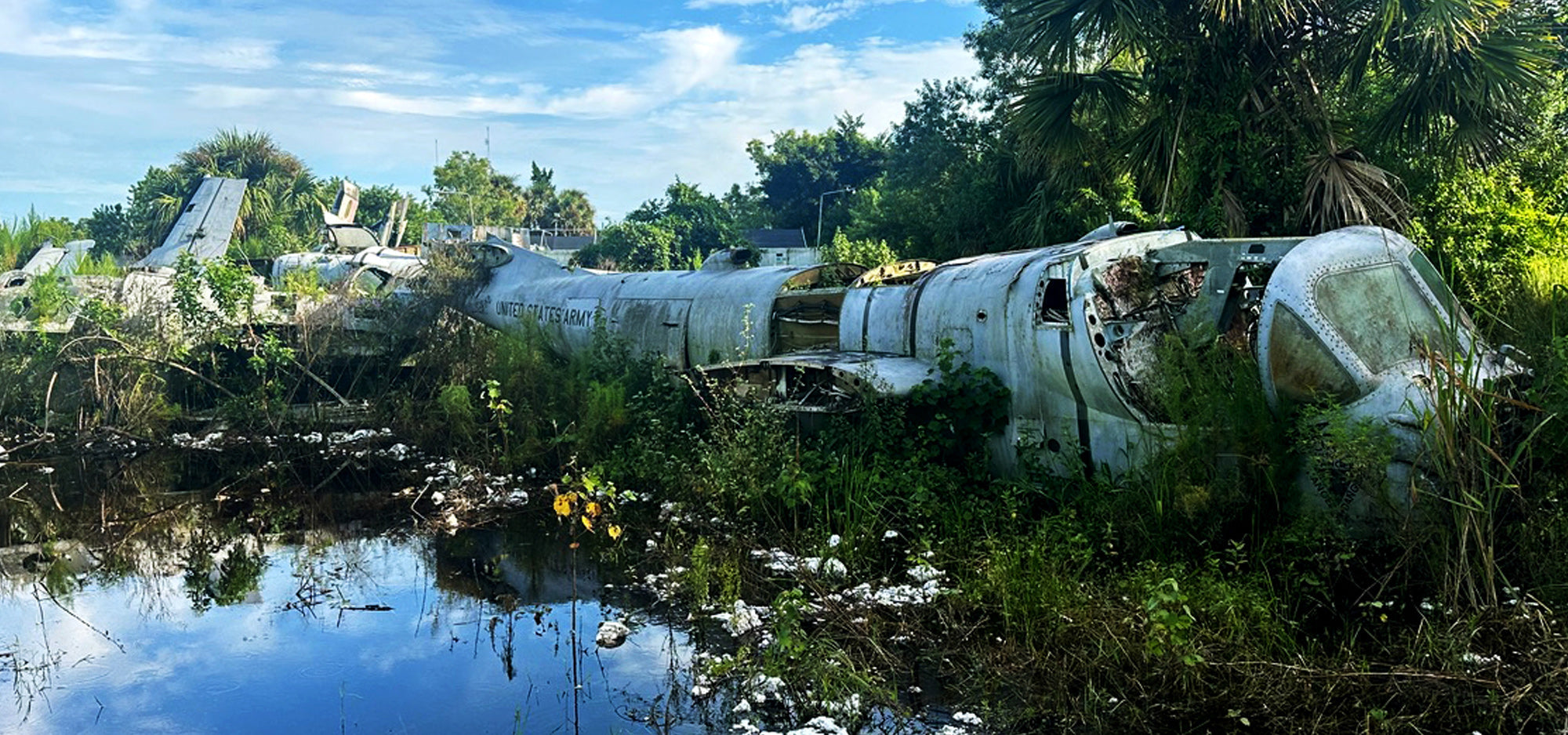
MotoArt founder Dave Hall discovered the aircraft in the swamps of South Florida, where it sat partially submerged in standing water alongside other abandoned aircraft. Years of exposure to the elements had taken their toll, and identifying the aircraft was not as simple as reading a registration number painted on the side.
Determined to learn the aircraft's history, Dave searched through the remains, digging through mud, vegetation, and debris to locate identifying markings. Eventually, he found the serial number that confirmed the aircraft's identity: 62-5902.


What might have remained a forgotten relic hidden in the Florida wetlands instead became part of MotoArt's mission to preserve aviation history. The aircraft was recovered and transported across the country to MotoArt's headquarters in Torrance, California, where its story could continue.


Today, material from 62-5902 has been carefully transformed into PlaneTags, allowing collectors to own a tangible piece of an aircraft that served during both the Vietnam War and the Cold War before being rediscovered decades later in an unlikely resting place.
"I was standing in the swamp trying to figure out exactly what we had found. Once I located the serial number and confirmed it was 62-5902, I knew we had uncovered an important piece of Army aviation history." - Dave Hall
Military aircraft are often remembered for speed, firepower, or combat achievements. The OV-1 Mohawk earned its place in aviation history for a different reason. Its mission was to gather information, support decision-making, and provide commanders with a clearer picture of the battlefield.

For more than thirty years, Mohawks served in Vietnam, Europe, and other locations around the world, helping pioneer technologies that would eventually become standard throughout military aviation. From early radar surveillance missions to advanced infrared reconnaissance, the aircraft helped demonstrate the growing importance of airborne intelligence during the Cold War era.


PlaneTags made from OV-1D Mohawk serial number 62-5902 preserve a tangible connection to that history. Crafted from authentic aircraft skin, each tag carries markings, variations, and characteristics unique to the material from which it was made.

Whether you are a military aviation enthusiast, Cold War historian, Army veteran, or PlaneTags collector, the OV-1D Mohawk represents an important chapter in the evolution of airborne reconnaissance. More than a collectible, it serves as a reminder of the aircraft and crews that worked behind the scenes to gather the information that shaped military operations for generations.
From reconnaissance aircraft like the OV-1D Mohawk to iconic fighters, bombers, and transports, the Cold War Collection celebrates the aircraft that defined nearly five decades of military aviation history.
Each PlaneTag is crafted from authentic aircraft material and preserves a unique chapter of the technological competition, military innovation, and aviation achievements that shaped the Cold War era.
If the Mohawk's story interests you, explore the rest of the Cold War Collection and discover other aircraft that served on the front lines of one of history's most influential periods.
The OV-1D Mohawk was a U.S. Army reconnaissance aircraft designed for battlefield surveillance and intelligence gathering during the Cold War.
The Mohawk combined short-field performance with advanced infrared and radar systems, allowing it to conduct reconnaissance missions day or night and in poor weather conditions.
SLAR allowed crews to scan large areas of terrain from the side of the aircraft, helping identify activity on the ground even in darkness or poor visibility.
Yes. Mohawks served extensively during the Vietnam War and throughout the Cold War in intelligence and surveillance roles.
Aircraft 62-5902 served with the U.S. Army's 2nd Military Intelligence Battalion in Europe.
Yes. Each PlaneTag is crafted from authentic material from OV-1D Mohawk serial number 62-5902.
The Airbus A330 That Helped Take Azul Beyond Brazil
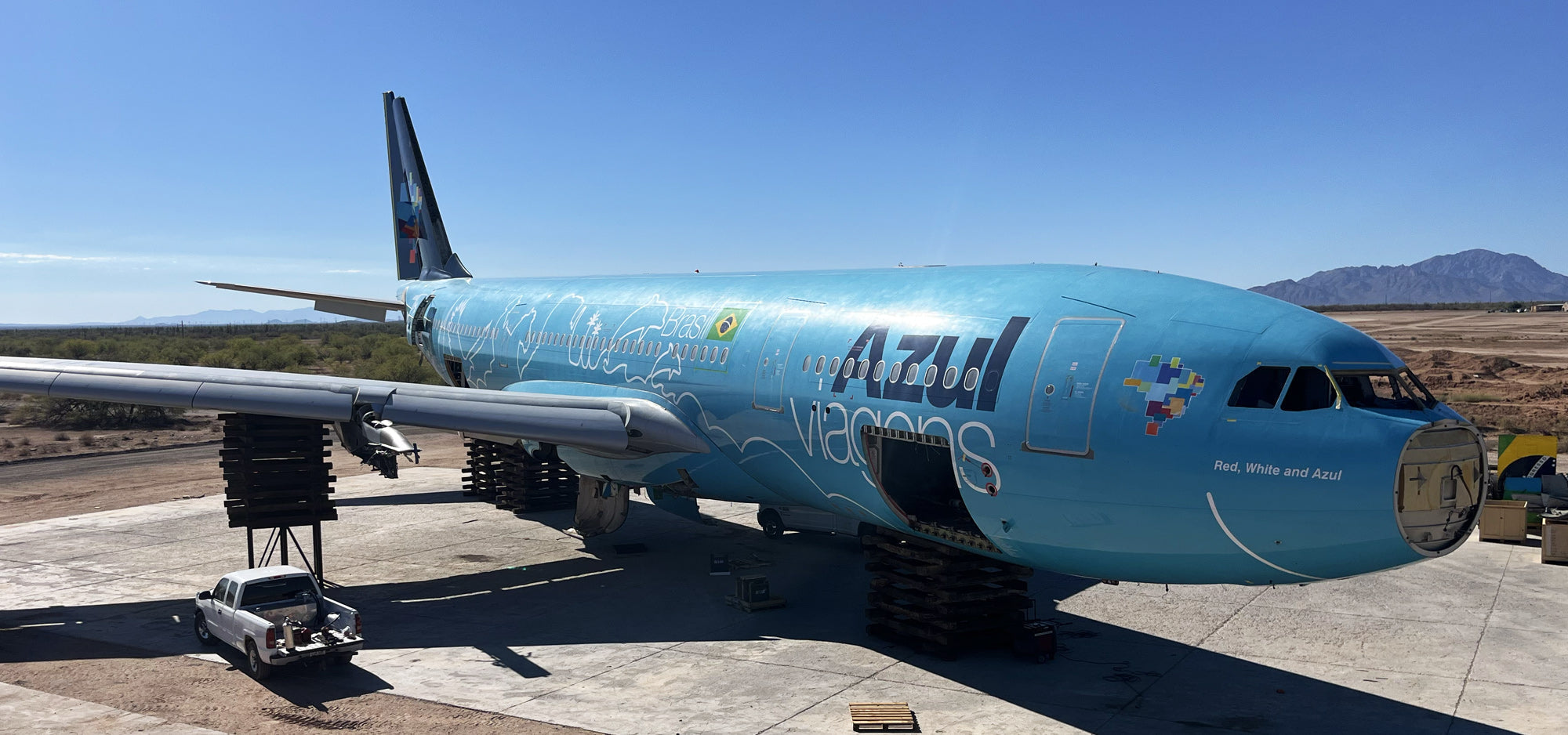
The aircraft operated its final passenger flights for Azul before being retired from service and placed into storage. Like many widebody aircraft retired in recent years, its future was uncertain. For many airliners, retirement marks the beginning of a slow journey toward dismantling and recycling, with little remaining to tell the stories of the passengers and crews who flew aboard them. For PR-AIU, however, the story was not over.
When MotoArt founder Dave Hall learned the aircraft had been retired, he recognized an opportunity to preserve a piece of an important chapter in commercial aviation history. Rather than allowing the aircraft to disappear entirely, Hall and the PlaneTags team traveled to inspect and acquire material from the retired Airbus A330, ensuring that part of the aircraft would survive long after its flying days had ended.
Three Identities, One Aircraft: The Story of MH-47G 05-03761
Some aircraft serve a single role throughout their careers. Others evolve with the times.
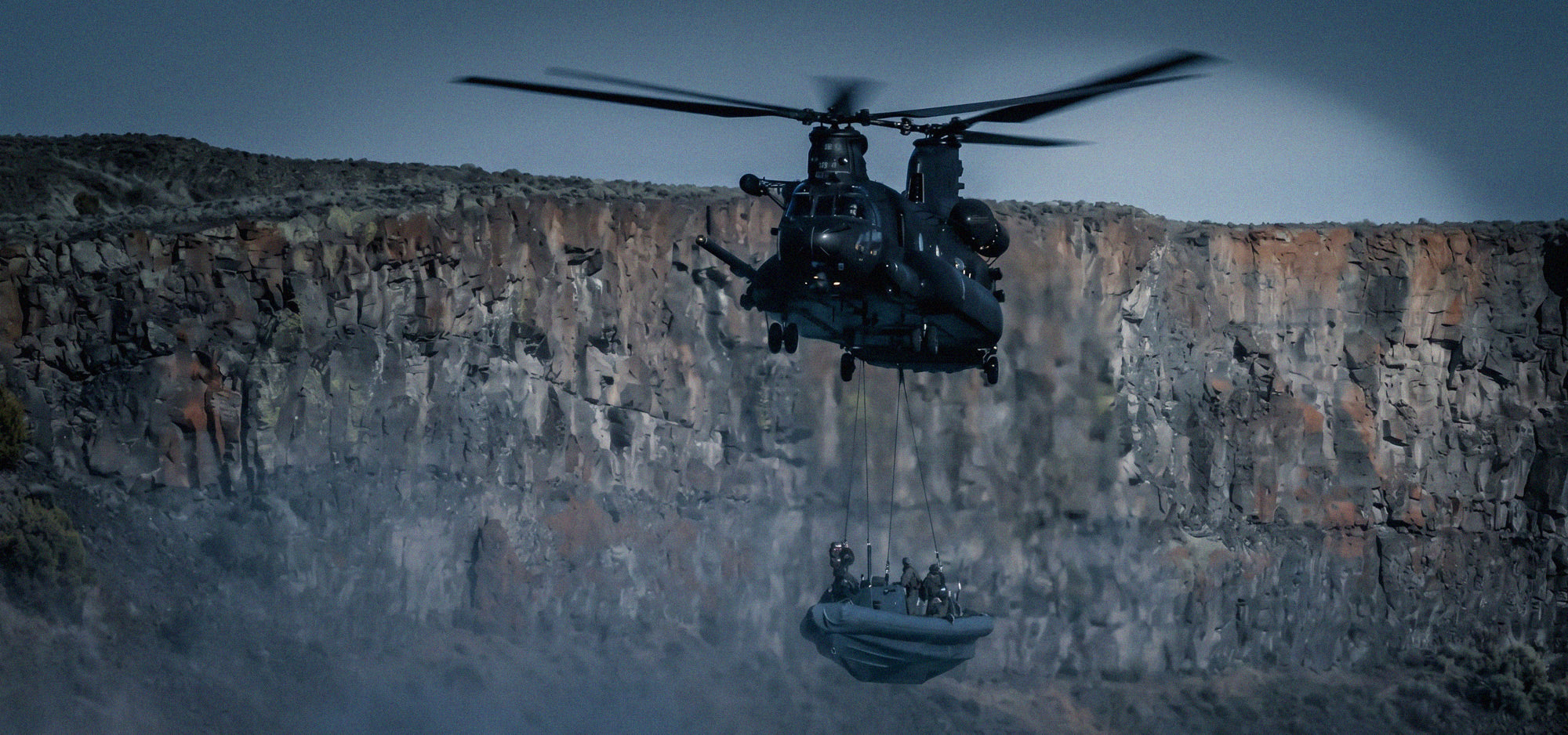
MH-47G Chinook 05-03761 is one of the rare aircraft that spent decades transforming alongside the U.S. Army itself. What began life as a CH-47A Chinook during the Vietnam era would later be rebuilt into a CH-47D before ultimately becoming an MH-47G, one of the world's most capable special operations helicopters.
Grumman OV-1D Mohawk: The U.S. Army's Battlefield Eye in the Sky
The Grumman OV-1 Mohawk was one of the most capable and technologically advanced reconnaissance aircraft operated by the U.S. Army during the Cold War. Designed to gather intelligence close to the front lines, the Mohawk combined short takeoff and landing performance with sophisticated sensor systems that allowed it to detect and monitor activity on the ground in nearly any weather conditions.
At a time when battlefield commanders increasingly relied on timely intelligence, the Mohawk provided information that could not always be obtained through traditional observation methods. Equipped with infrared sensors, cameras, and side-looking airborne radar systems, it helped military planners track troop movements, monitor supply routes, and identify potential threats day or night.
Over a service life that spanned more than three decades, the Mohawk flew missions in Vietnam, served with Army intelligence units in Europe during the height of the Cold War, and helped pioneer many of the airborne surveillance techniques that later became standard throughout the military.
Today, PlaneTags made from OV-1D Mohawk serial number 62-5902 preserve the legacy of an aircraft that played a critical role in military reconnaissance during a period of rapid technological change.

Share:
Built for Any Mission: The Lockheed C-130 Hercules
Three Identities, One Aircraft: The Story of MH-47G 05-03761