

- by Dianna Lopez
Jetsetting Back in Time: Exploring Pan Am's Impact on Air Travel
- by Dianna Lopez
This site uses cookies for better user experience and analytics.
In 2023, MotoArt was given the opportunity to tag one of the most iconic commercial aircraft imaginable. Follow along with us in this series of articles about a Pan Am 727, and sign up to secure your Pan Am Blue.

Founded in 1927, Pan Am remains a monumental figure in the history of aviation nearly 100 years later.Pan Am played a pioneering role in shaping the global airline industry, from its early days of seaplane operations to becoming an international giant. Throughout its history, Pan Am achieved numerous milestones, including inaugurating transatlantic and transpacific flights, introducing revolutionary aircraft like the Boeing 747, and setting the standard for luxury and service in air travel. Pan Am’s blue globe logo became synonymous with prestige, embodying its expansive global reach. Although the airline ceased operations in 1991, Pan Am's legacy endures, symbolizing an era when the skies were a realm of boundless adventure and the world became more interconnected than ever before.
The 1920s have been called the “Golden Age of Aviation”, with key breakthroughs in airplane design and development. 1927 alone was a momentous year in aviation. On May 27, 1927, Charles Lindbergh completed the first solo, nonstop transatlantic flight from Long Island, New York, to Paris, France, in his plane, Spirit of St. Louis. Cessna Aircraft Company was established and several airlines formed that year, including Brazil’s first airline Varig, Boeing Air Transport, which became United Airlines, and Yugoslavia’s first civilian airline, Aeroput.
That same year, the United States Postal Service requested bids to deliver mail from Key West, Florida, to Havana, Cuba. Three U.S. companies bid on the contract - Pan American Airways, founded March 14, 1927, by U.S. Army Air Corps officers Henry “Hap” Arnold, Carl Spaatz, and John Jouett, as a shell company; Aviation Corporation of the Americas (ACA) founded by Juan Trippe on June 2, 1927; and Atlantic Gulf and Caribbean Airways, established October 11, 1927 by banker Richard Hoyt. SCADTA, a German-owned Columbian air carrier, was also trying to obtain airmail contracts.

The original uploader was Centpacrr at English Wikipedia. - The Cooper Collection of Aero Postal History. Transferred from en.wikipedia to Commons by Stan Shebs using CommonsHelper., Public Domain, Link
Although the contract was awarded to Pan American Airways, they did not have airplanes or the right to land in Cuba. The three companies formed a partnership, formally merging on June 23, 1928, with Trippe (now operational head of Pan American Airways) and his partners holding 40% of the equity and a chartered Fairchild FC-2. Trippe, a visionary entrepreneur with a passion for aviation, aimed to establish a groundbreaking airline that would connect nations and set new standards in international air travel. Under Trippe's leadership, Pan Am took its first steps with airmail services between Florida and Cuba, rapidly expanding its services and securing contracts to operate flights to various Caribbean destinations. The airline's innovative spirit and commitment to pushing the boundaries of air transportation laid the foundation for its eventual ascent to becoming a global aviation powerhouse.
Enjoy this BBC documentary about Pan Am’s history.

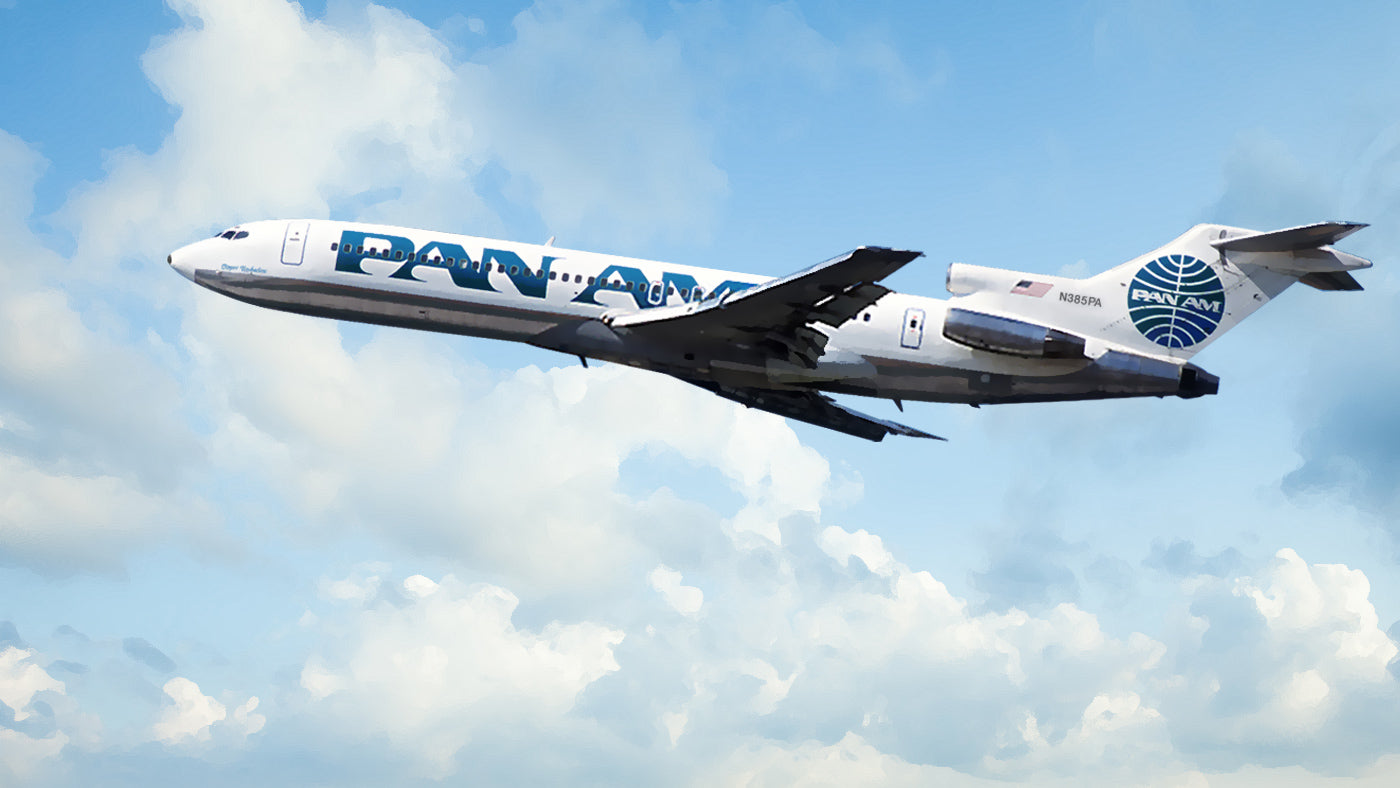
Pan Am Boeing 727-227; N385PA, August 1992 flickr photo by Aero Icarus shared under a Creative Commons (BY-NC-SA) license
Pan Am's history is punctuated by a series of groundbreaking milestones that revolutionized the aviation industry. From the introduction of long-range, transoceanic flights to the establishment of the InterContinental division, which connected the continents like never before, Pan Am consistently pushed the boundaries of what was considered possible in air travel. It introduced innovative technologies such as the Boeing 707, pioneering the era of commercial jet travel. Here are some highlights of a noteworthy sixty-four-year span.
 By Jon Proctor - https://www.jetphotos.com/photo/6867311 , GFDL 1.2, Link
Pan Am's legacy is underscored by its role in forging crucial routes that connected the far corners of the globe. Pan Am significantly contributed to the globalization of air travel, from the famous 'Clipper' flights that traversed the Atlantic Ocean to the establishment of the 'Round the World' routes. Its impact was not merely confined to the logistical aspect; it played a vital role in fostering cultural exchange, enabling people from diverse backgrounds to connect and share experiences on an unprecedented scale.

Brought directly into the fray by the attack on Pearl Harbor, Pan Am played a crucial role in supporting the Allied forces and contributing to the war effort. While Pan Am was primarily a civilian airline, it transformed into a vital wartime transport service. The airline operated transatlantic and transpacific routes, transporting personnel, supplies, and equipment for the military. The Clippers, Pan Am's iconic flying boats, were utilized for long-distance flights, connecting the United States to Europe and the Pacific. Pan Am's logistical support was instrumental in maintaining critical supply lines, aiding in troop movements, and facilitating diplomatic efforts during a tumultuous period in global history.
Pan Am made significant contributions to the massive humanitarian effort to supply West Berlin during the Soviet blockade from 1948 to 1949. Pan Am operated cargo flights, transporting essential supplies such as food, coal, and medicine into Tempelhof Airport in West Berlin. Similarly, Pan Am was commissioned to operate Freedom Flights to bring Cubans seeking asylum from Castro's regime to the United States. Operating two flights a day, five days a week, nearly 300,000 Cubans fled between 1965 and 1973. The airline's historic contributions underscored its adaptability and importance beyond civilian travel, solidifying its legacy as an integral part of aviation history.

“Many of us remember seeing Pan Am planes in the sky,” says MotoArt PlaneTags owner Dave Hall. “The name and logo have a way of bringing you back to the golden age of aviation.” When Hall discovered a derelict Pan Am aircraft in Tennessee, still clad in blue and white, he knew he finally had the opportunity to tell the story of a Pan Am 727.
Pan Am PlaneTags will be available on November 30, 2023. Follow PlaneTags on social media for the rest of the Pan Am PlaneTags story. Sign up to be included in exclusive Pan Am emails and offers from MotoArt.
Follow @panamofficial | Follow @planetags on Instagram

From Runway to Fairway: The Story Behind Our Delta 717 Golf Ball Markers
The Boeing 717 played a key role in Delta Air Lines’ short-haul fleet for years. Today, material from these aircraft is being reused in a new way. Delta 717 golf ball markers are made from authentic aircraft skin, turning a retired jet into a functional item used on the green.
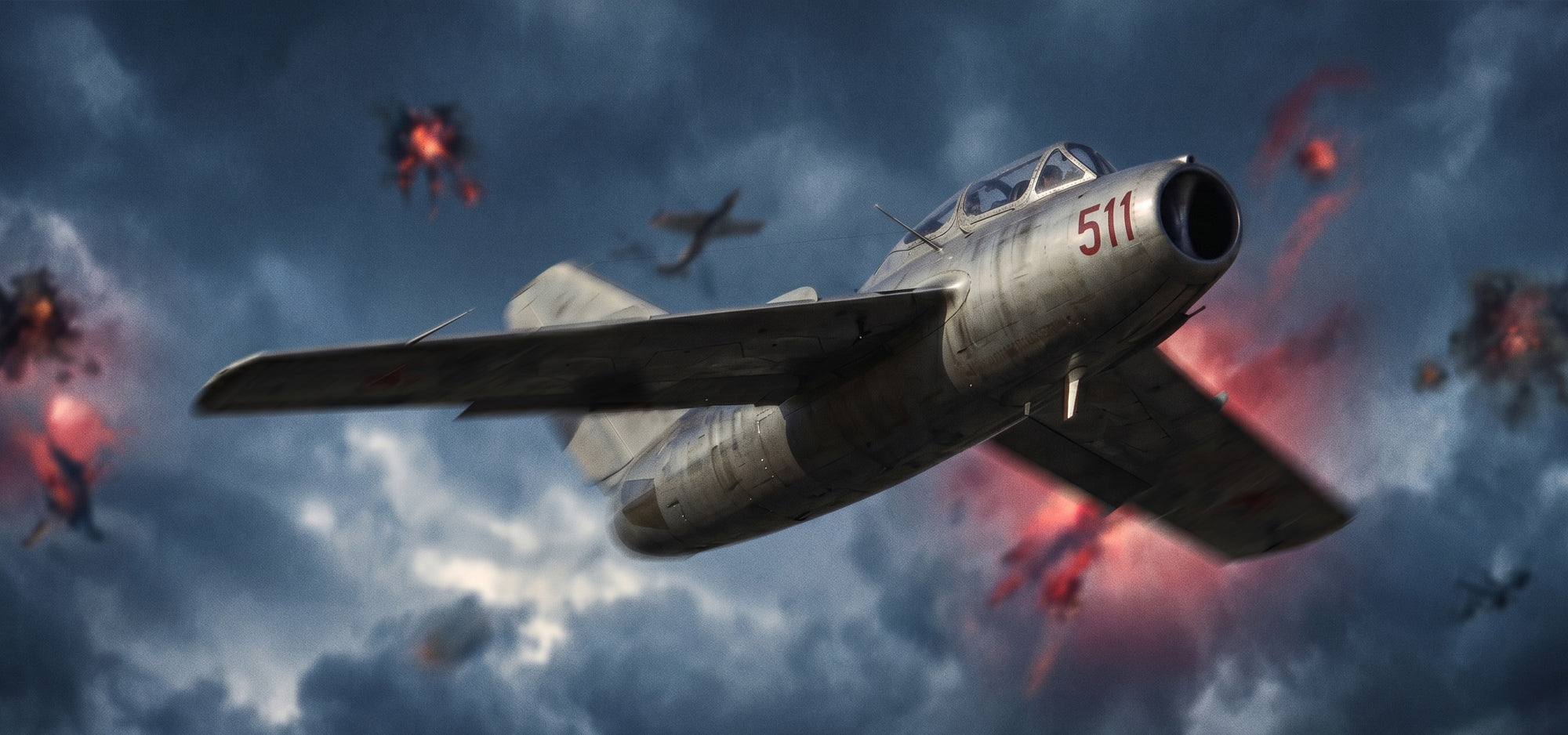
MiG-15: Cold War History Built Behind the Iron Curtain
The MiG-15 was one of the most influential jet fighters of the early Cold War. With its swept wings, near-transonic speed, and devastating cannon armament, it changed aerial combat forever and became a feared adversary in the skies over Korea.
Now, MotoArt is preserving the legacy of this iconic Soviet fighter with authentic PlaneTags made from the skin of Polish-built SBLim-2 N2400X “Red 511.” This rare trainer variant served for decades before eventually making its way to the United States, where it was preserved in 2026 for aviation enthusiasts and collectors alike.

Two NASA T-38 Talons: Training the Pilots and Astronauts Who Pushed the Limits
Some aircraft make headlines. Others make history behind the scenes.
The Northrop T-38 Talon is one of the most important jets most people never think about. Introduced in the early 1960s, it became the world’s first supersonic trainer and has shaped generations of high-performance pilots.
At NASA, the T-38 still plays a critical role today. Long before launch, astronauts are in the cockpit of a Talon, building the precision and discipline required for spaceflight.
This release features two NASA T-38 Talons. Each followed a different path. Together, they represent the full scope of NASA flight.
Share:
English Electric Canberra: Groundbreaking British Jet-Powered Bomber
Wings of Hospitality: Inside the Unique Culture that Defined Pan Am