

- by Dianna Lopez
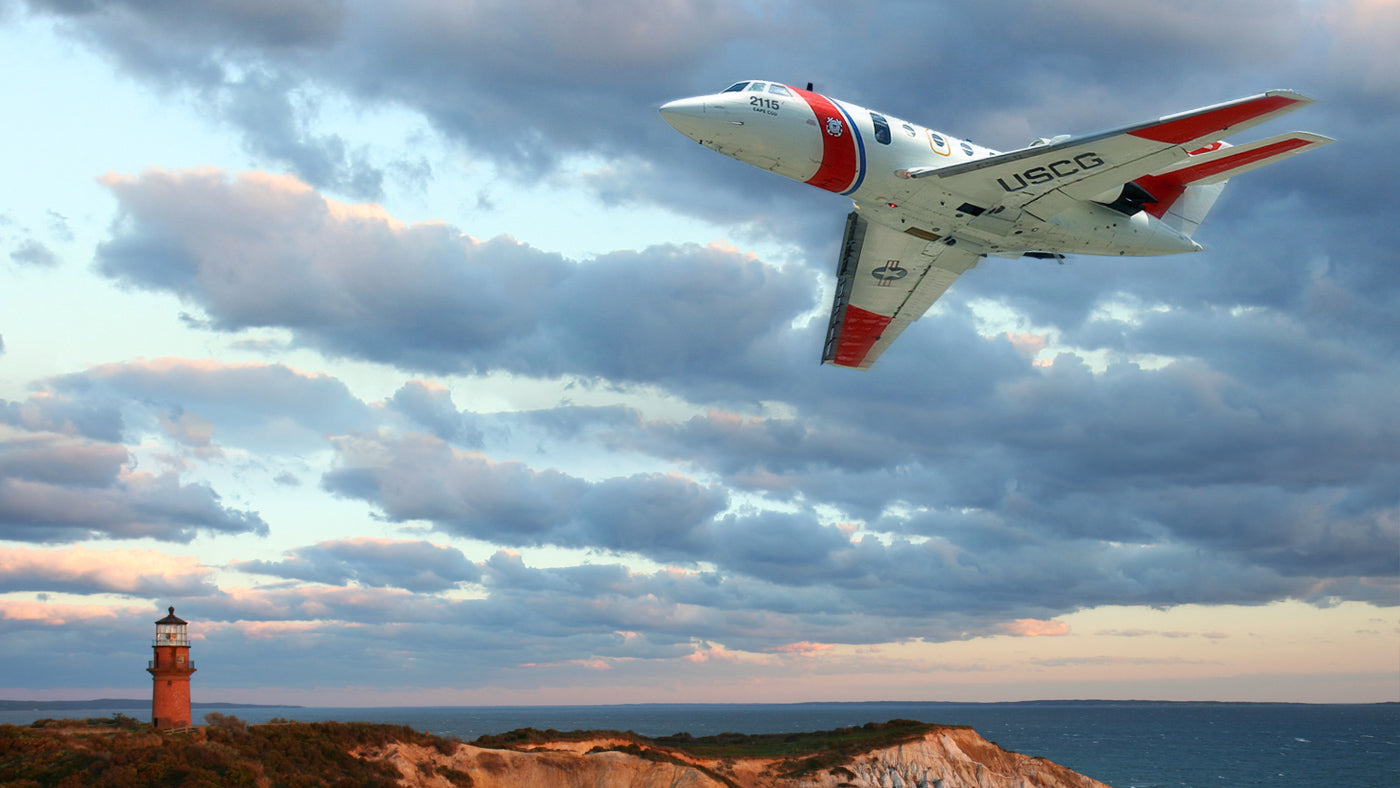
Dassault HU-25 Guardian: The US Coast Guard Falcon
- by Dianna Lopez
This site uses cookies for better user experience and analytics.
The Dassault HU-25A Guardian was a crucial asset to the USCG's fleet, providing critical support for maritime safety and security missions. Its versatility, speed, and advanced equipment make it an essential tool in protecting the nation's borders and saving lives at sea. Read more about the Guardian and don’t miss adding a Dassault HU-25 to your own PlaneTags collection.
The Dassault HU-25A Guardian is a versatile and reliable aircraft which was used by the United States Coast Guard (USCG) for various missions, including search and rescue, surveillance, and law enforcement. It is a modified version of the French-made Dassault Falcon 20 business jet and was in service with the USCG from 1982 to 2014.

Dassault HU-25D Guardian ‘2113 flickr photo by HawkeyeUK shared under a Creative Commons (BY-SA) license
The Guardian's primary role was to patrol and protect the United States' maritime borders and enforce laws and regulations on the water. It was equipped with advanced radar, sensors, and cameras that allowed it to detect and track vessels in all weather conditions. It also had a range of communication equipment, including radios and satellite communication, to facilitate coordination with other agencies.
The Guardian was capable of operating from both land and water, making it ideal for search and rescue missions. It could fly at high speeds and altitudes, and its short takeoff and landing capability allowed it to access remote or confined areas quickly. The aircraft was also equipped with specialized rescue equipment, including a hoist, life rafts, and survival gear, to aid in rescue operations.
The Dassault HU-25 Guardian was developed by Dassault Aviation, a French aircraft manufacturer, in the 1970s as a business jet. In 1981, the company was awarded a contract by the United States Coast Guard (USCG) to modify the Falcon 20 for use in maritime surveillance and search and rescue operations. The resulting aircraft was designated the HU-25A Guardian and first entered service with the USCG in 1982.

Guardian flickr photo by qnr shared under a Creative Commons (BY-SA) license
To meet the USCG's requirements, Dassault Aviation made several modifications to the Falcon 20 design. The most significant changes included adding a large radome on the nose of the aircraft to house advanced radar and sensors, as well as strengthening the airframe for operations in harsh maritime environments. The Guardian was also fitted with specialized equipment, such as a rescue hoist and a maritime surveillance system, to enhance its search and rescue capabilities.
The HU-25A Guardian went through several upgrades throughout its service life, including avionics upgrades, engine upgrades, and modifications to the aircraft's mission equipment. In 1989, Dassault Aviation delivered an upgraded version of the aircraft, the HU-25C Guardian, which featured improved radar and surveillance capabilities. The Guardian remained in service with the USCG until it was retired in 2014, after more than three decades of reliable service. Today, the HU-25A Guardian continues to be regarded as a highly capable aircraft, and its development represents a successful collaboration between French and American aviation industries.

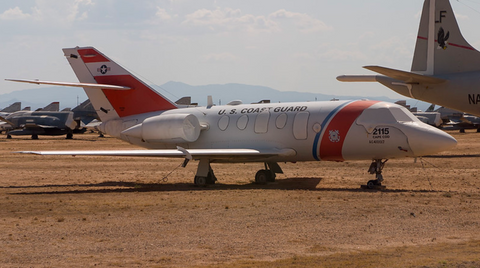
Photo by DdePruis, used with permission. Photo taken in 2009
Our Guardian, S/N 2115, was constructed as an HU-25A and delivered to the United States Coast Guard in 1983. 2115 served with CGAS (Coast Guard Air Station) San Diego and CGAS Cape Cod. Its missions included search and rescue operations, maritime surveillance, and law enforcement. With a range of up to 2,000 nautical miles and the ability to stay airborne for up to six hours, it was ideal for conducting long-range patrols over vast ocean waters. Equipped with a variety of sensors - including radar, infrared cameras, and other advanced avionics - the Guardian had the ability to locate and track vessels in all types of weather conditions. The Guardian was also used to enforce U.S. laws and treaties, such as interdiction of drug shipments and illegal immigration. After retiring to the AMARC in 2001, it made its final landing at at Pima Air and Space Museum in 2014.
The Pima Air and Space Museum, located in Tucson, Arizona, is one of the largest non-government-funded aviation museums in the world. The museum is home to around 400 historic aircraft, including military and civilian planes, helicopters, and even a space shuttle rocket booster. One of the museum's primary objectives is to preserve aviation history for future generations. To achieve this, the museum has a dedicated restoration and preservation team that works tirelessly to restore and maintain aircraft in their collection. The team employs traditional preservation techniques such as sanding, painting, and repairing damaged components, and also utilizes modern technologies like 3D printing to create replacement parts. Pima has generously provided MotoArt with material from such projects so that the stories of these aircraft can be shared with the next generation.
 Photo by ZD703, used with permission. Taken 2015 at the storage/restoration area at Pima Museum, just across from Davis-Monthan Air Base.
In addition to their preservation efforts, the museum also offers educational programs and tours to engage visitors and promote a deeper understanding and appreciation of aviation and military history. Through their efforts, the Pima Air and Space Museum is helping to ensure that the stories and innovations of the aviation industry are not forgotten.
Pima Air and Space Museum has two Guardians - 2115 and 2132. Number 2132 is on display. See this Pima video, discussing the Dassault HU-25 Guardian.
MotoArt owner Dave Hall was honored to work again with Pima Air and Space Museum to create HU-25 Guardian PlaneTags. “The Dassault Guardian is the newest plane in a series we are working on with material provided by Pima,” says Hall. “It’s pretty cool to have this opportunity to work with such a prestigious organization and have them as advocates for what we do with PlaneTags.” The team headed out to the Arizona desert to retrieve the skin from number 2115. Here are some photos from the team.


The newest PlaneTags are made from the authentic skin of a Dassault Aviation HU-25. They are numbered in a series of 2,750 and will initially be available in the following variants:
As with every PlaneTags release, there are some variants which will sell out almost immediately because there is just not that much of the material. Make sure you are signed up for our mailing list and follow PlaneTags on social media so you don't miss a release.


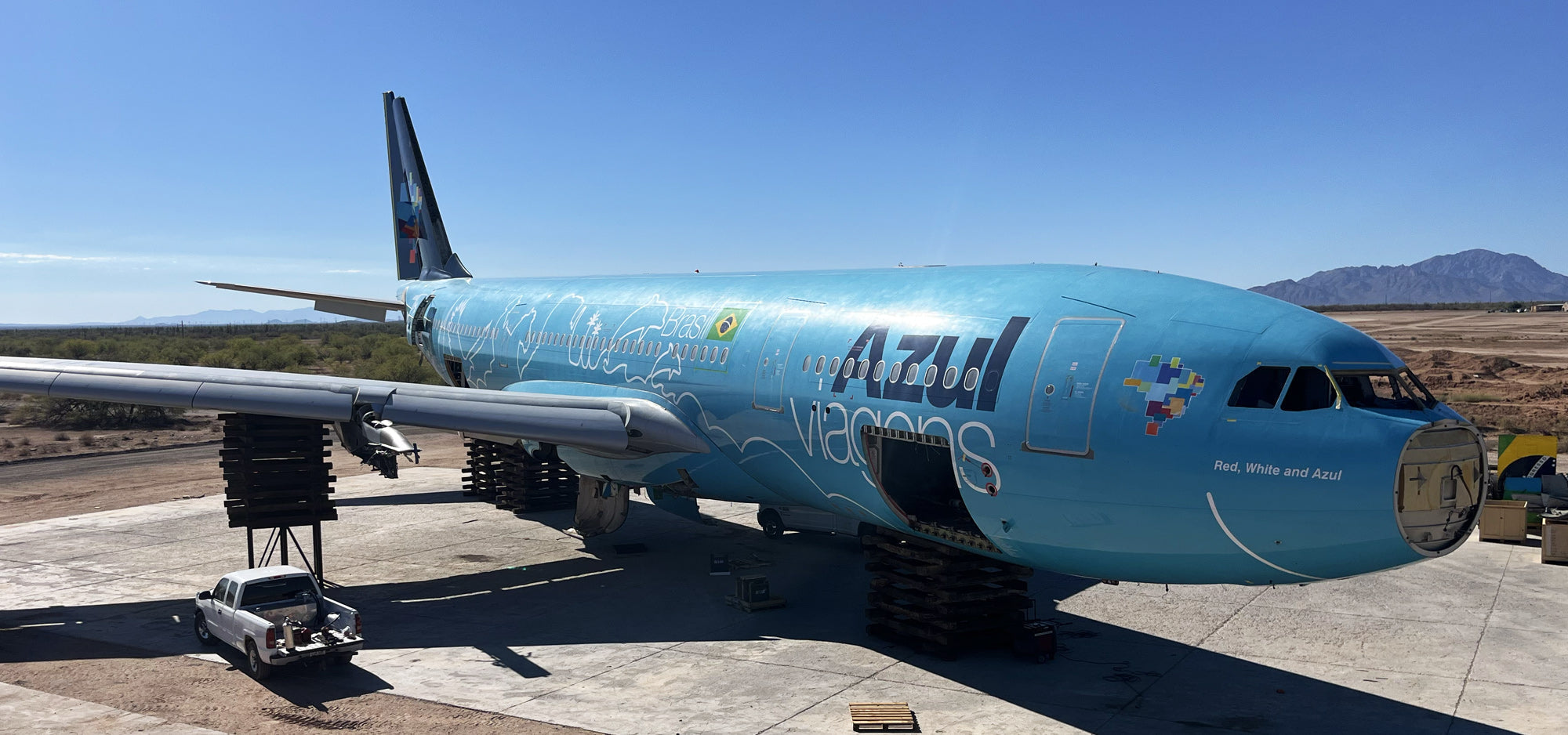
The Airbus A330 That Helped Take Azul Beyond Brazil
The aircraft operated its final passenger flights for Azul before being retired from service and placed into storage. Like many widebody aircraft retired in recent years, its future was uncertain. For many airliners, retirement marks the beginning of a slow journey toward dismantling and recycling, with little remaining to tell the stories of the passengers and crews who flew aboard them. For PR-AIU, however, the story was not over.
When MotoArt founder Dave Hall learned the aircraft had been retired, he recognized an opportunity to preserve a piece of an important chapter in commercial aviation history. Rather than allowing the aircraft to disappear entirely, Hall and the PlaneTags team traveled to inspect and acquire material from the retired Airbus A330, ensuring that part of the aircraft would survive long after its flying days had ended.
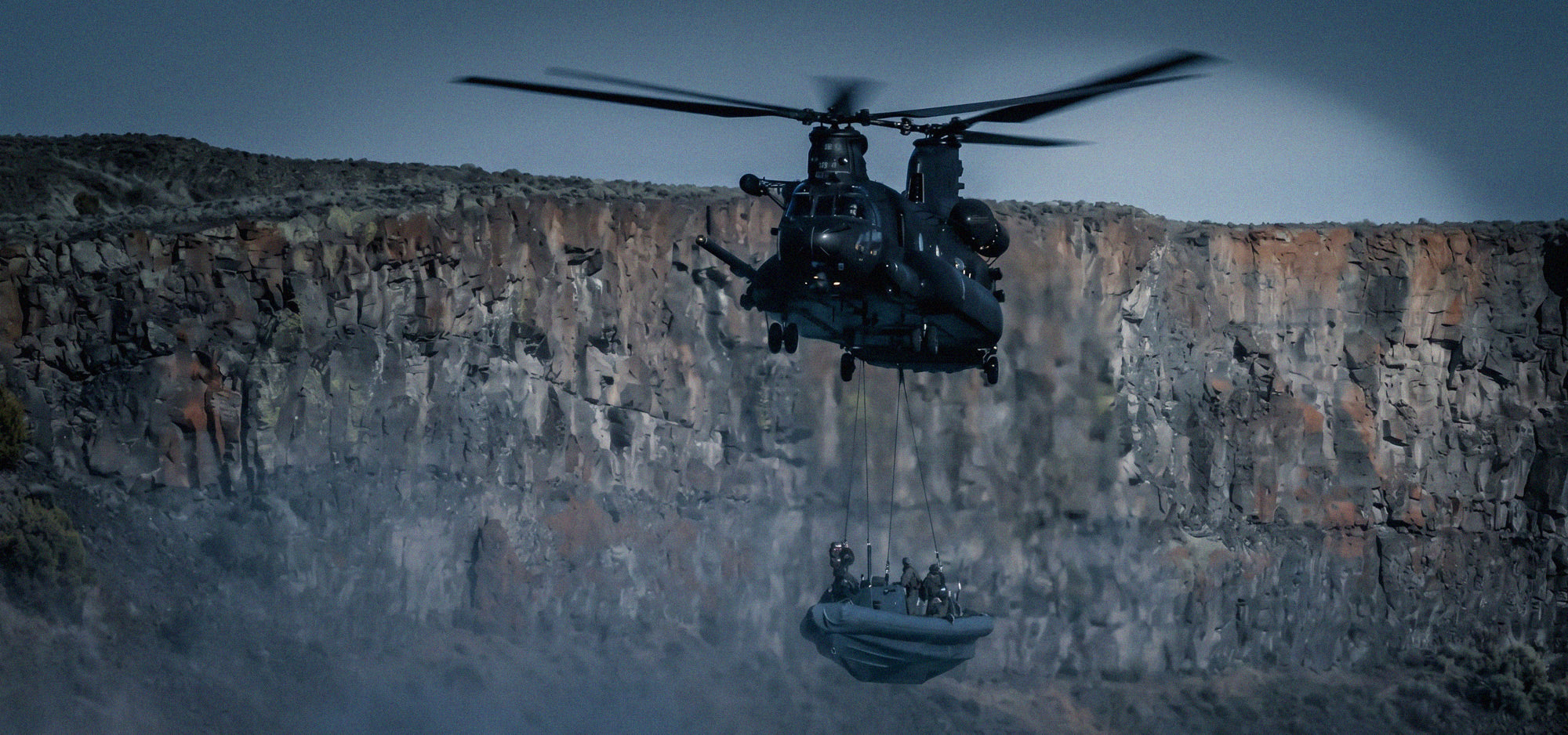
Three Identities, One Aircraft: The Story of MH-47G 05-03761
Some aircraft serve a single role throughout their careers. Others evolve with the times.
MH-47G Chinook 05-03761 is one of the rare aircraft that spent decades transforming alongside the U.S. Army itself. What began life as a CH-47A Chinook during the Vietnam era would later be rebuilt into a CH-47D before ultimately becoming an MH-47G, one of the world's most capable special operations helicopters.

Grumman OV-1D Mohawk: The U.S. Army's Battlefield Eye in the Sky
The Grumman OV-1 Mohawk was one of the most capable and technologically advanced reconnaissance aircraft operated by the U.S. Army during the Cold War. Designed to gather intelligence close to the front lines, the Mohawk combined short takeoff and landing performance with sophisticated sensor systems that allowed it to detect and monitor activity on the ground in nearly any weather conditions.
At a time when battlefield commanders increasingly relied on timely intelligence, the Mohawk provided information that could not always be obtained through traditional observation methods. Equipped with infrared sensors, cameras, and side-looking airborne radar systems, it helped military planners track troop movements, monitor supply routes, and identify potential threats day or night.
Over a service life that spanned more than three decades, the Mohawk flew missions in Vietnam, served with Army intelligence units in Europe during the height of the Cold War, and helped pioneer many of the airborne surveillance techniques that later became standard throughout the military.
Today, PlaneTags made from OV-1D Mohawk serial number 62-5902 preserve the legacy of an aircraft that played a critical role in military reconnaissance during a period of rapid technological change.
Share:
Boeing 737: The Piedmont Pacemaker
Aloha Airlines 737-200: Pioneering Low-Cost Air Travel in Hawaii