

- by Dianna Lopez
A-4 Skyhawk: A Small But Tough Fighter
- by Dianna Lopez
A question? Visit our contact page
This site uses cookies for better user experience and analytics.

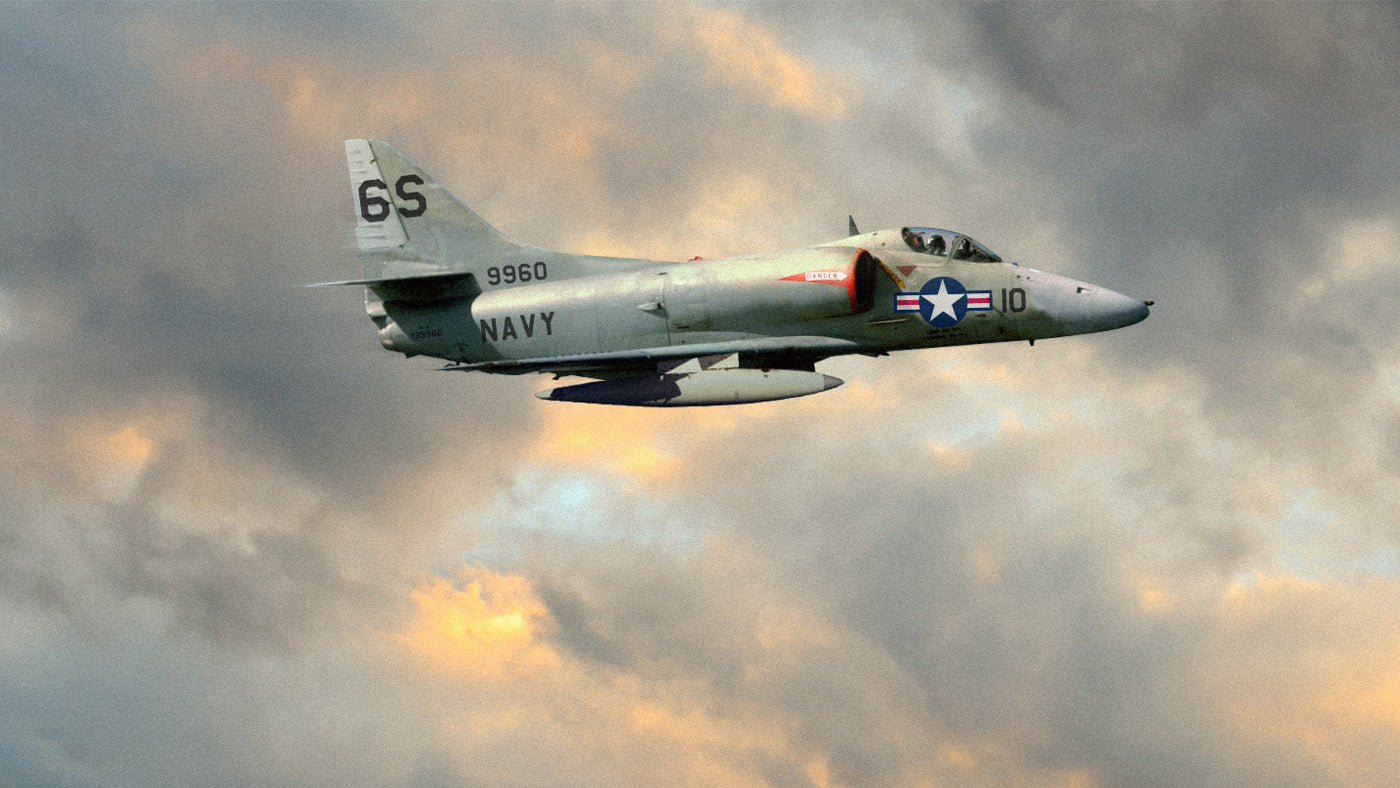
Photo by Lt.JG Nelson, U.S. Navy - This media is available in the holdings of the National Archives and Records Administration, cataloged under the National Archives Identifier (NAID) 6430101.
The Douglas A4 Skyhawk is a lightweight, single engine, subsonic, carrier-capable attack aircraft. It was developed in the early 1950s for the U.S. Navy and Marine Corps by Douglas Aircraft Company, later McDonnell Douglas. It could carry a bomb load comparable to a Boeing B-17 bomber from World War II, as well as deliver nuclear weapons utilizing a low-altitude bombing method and a "loft" delivery approach.
In 1952, the U.S. Navy contracted with Douglas Aircraft Company to build a prototype, XA4D-1, and later an additional 19 A-4s. It was a compact, lightweight design, featuring a fixed delta wing so compact that it could be stowed on a carrier without the need for folding. The high performance, versatile aircraft offered stability during take off and landing, excellent low speed control, and was effective in its mission to attack and destroy surface targets. 2,960, of different variants, were constructed between 1954 and 1979. Read more about the fascinating production history of the Skyhawk.

The Navy’s requirement for its new carrier-based strike jet included the capability for carrying a 2,000 pound payload up to 3,000 nautical miles, a maximum takeoff weight of no more than 30,000 pounds, at less than one million dollars each. Heinemann promised he could deliver that in an aircraft faster and lighter than required. The A-4 was a success - Heinemann’s team came through on every promise. XA4D-1 weighed 7,896 pounds and cost $860,000. In spite of its minimal size, it could carry much more than the 2,000 pounds required by the Navy - more like an external capacity to 8,200 pounds in later models, thanks to the solid foundation designed by Heinemann.
Here is a short history of the Douglas A-4 Skyhawk.
The scaled down Skyhawk was also called "Heinemann's Hot-Rod", "Scooter", "Tinker Toy Bomber" or “Tink”, "Bantam Bomber", and "Kiddiecar". They played a vital role in the Vietnam War, the Yom Kippur War, and the Falklands War. Read more about their role in Vietnam.


“I believe that the aircraft’s most significant contribution revolves around how it proved that with diligent engineering, hard work, and continuing cooperation between builder and buyer, wonders can be worked. Wonders that last a very long time.” - Ed Heinemann
Edward Henry Heinemann (March 14, 1908 – November 26, 1991), began working for Douglas Aircraft Company as a draftsman in 1926. Although he had never completed a formal engineering degree, he rose through the ranks, apprenticing to other legends Donald Douglas, Jack Northrop, and Howard Hughes. He moved on to project engineer, then Chief Engineer in 1936. During his long tenure with Douglas, he was behind some of the finest combat aircraft of the 1940s and ’50s. including:
He became Vice President for Military Aircraft in 1958, before joining Guidance Technology as Executive Vice President in 1960, then on to Corporate Vice President - Engineering for General Dynamics, which he held until retirement in 1973. He was awarded many awards and recognitions for his contributions to aviation, including the Collier Trophy in 1953, the Guggenheim Medal, National Medal of Science, and inclusion in the Aviation Hall of Fame.


BuNo 139960 was constructed as an A4D-1 in 1957, and was delivered to the VA-34 shortly after. 9960 served with a number of light attack squadrons during its Navy career. In addition to the Aircraft History Cards (1957 - 1966, 1966 - 1968, 1968) provided by Naval Aviation Museum archives, the following information is available courtesy of skyhawk.org.
Stored May 1963 - April 1966 at NAF Litchfield Park, AZ

After being stricken off charge in 1968, 9960 found itself in the trusted hands of Yanks Air Museum in Chino, California. The museum’s collection began in 1973 with a Beech Staggerwing. Since then, it has grown to 200+ aircraft, many of which are one of a kind, rare specimens. For decades, the cockpit of 9960 was spotted in Yanks’ outdoor storage, with many wondering what would happen to it. In 2021, Yanks and MotoArt teamed up to put the remaining pieces of this Skyhawk into the hands of aviation enthusiasts, in the form of PlaneTags.
Aviation fans, Yanks is open for business. It’s just an hour east of Los Angeles and a great destination for the whole family. Take a tour of the museum and restoration boneyard, and visit the gift shop.
Follow the journey of the A4 Skyhawk from Yanks to MotoArt Studios in Torrance, CA.


Creating aviation skin collectibles from decades-old fuselage pieces can be tricky, especially with a smaller vintage aircraft. The team is careful in handling and cutting the vintage airplane parts in order to maximize the amount of PlaneTags that can be created. With a smaller plane like the A-4 Skyhawk, this is crucial.
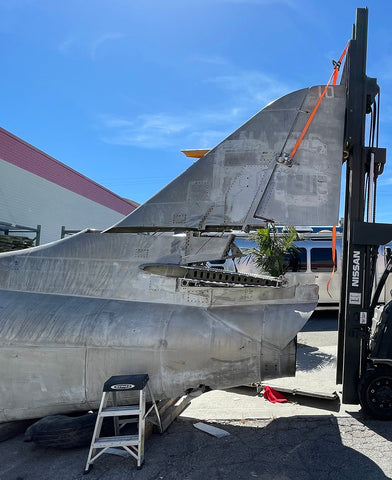


The Douglas A-4 Skyhawk PlaneTags have arrived. Made from the original fuselage skin from BuNo 139960, MotoArt has created another incredible warbird collectible. This release is a smaller vintage edition of 3,500 PlaneTags. Each comes attached to a colorful display card with the plane’s details and story. They are essential for your aircraft skin collection if you are a PlaneTags collector. They also make the perfect pilot gift, a gift for a veteran, a Navy gift or for someone who loves military aircraft or history. Douglas A-4 Skyhawk authentic skin collectibles are available at planetags.com.


Two NASA T-38 Talons: Training the Pilots and Astronauts Who Pushed the Limits
Some aircraft make headlines. Others make history behind the scenes.
The Northrop T-38 Talon is one of the most important jets most people never think about. Introduced in the early 1960s, it became the world’s first supersonic trainer and has shaped generations of high-performance pilots.
At NASA, the T-38 still plays a critical role today. Long before launch, astronauts are in the cockpit of a Talon, building the precision and discipline required for spaceflight.
This release features two NASA T-38 Talons. Each followed a different path. Together, they represent the full scope of NASA flight.

Life Aboard USS Midway: The Doors That Held It All Together
The newest Midway PlaneTags are made from authentic USS Midway watertight doors, including doors such as 2-75-6.
Located below deck, these doors connected the spaces where sailors lived and worked. Layers of paint and wear reflect years of daily use.
Open. Closed. Passed through thousands of times.
Through MotoArt’s partnership with the USS Midway Museum, this material has been preserved and given a second life.
American Airlines MD-82 N470AA: The Super 80 That Defined an Era
As American Airlines approaches its 100-year anniversary in 2026, it is a good time to look back at the aircraft that supported its growth over the decades.
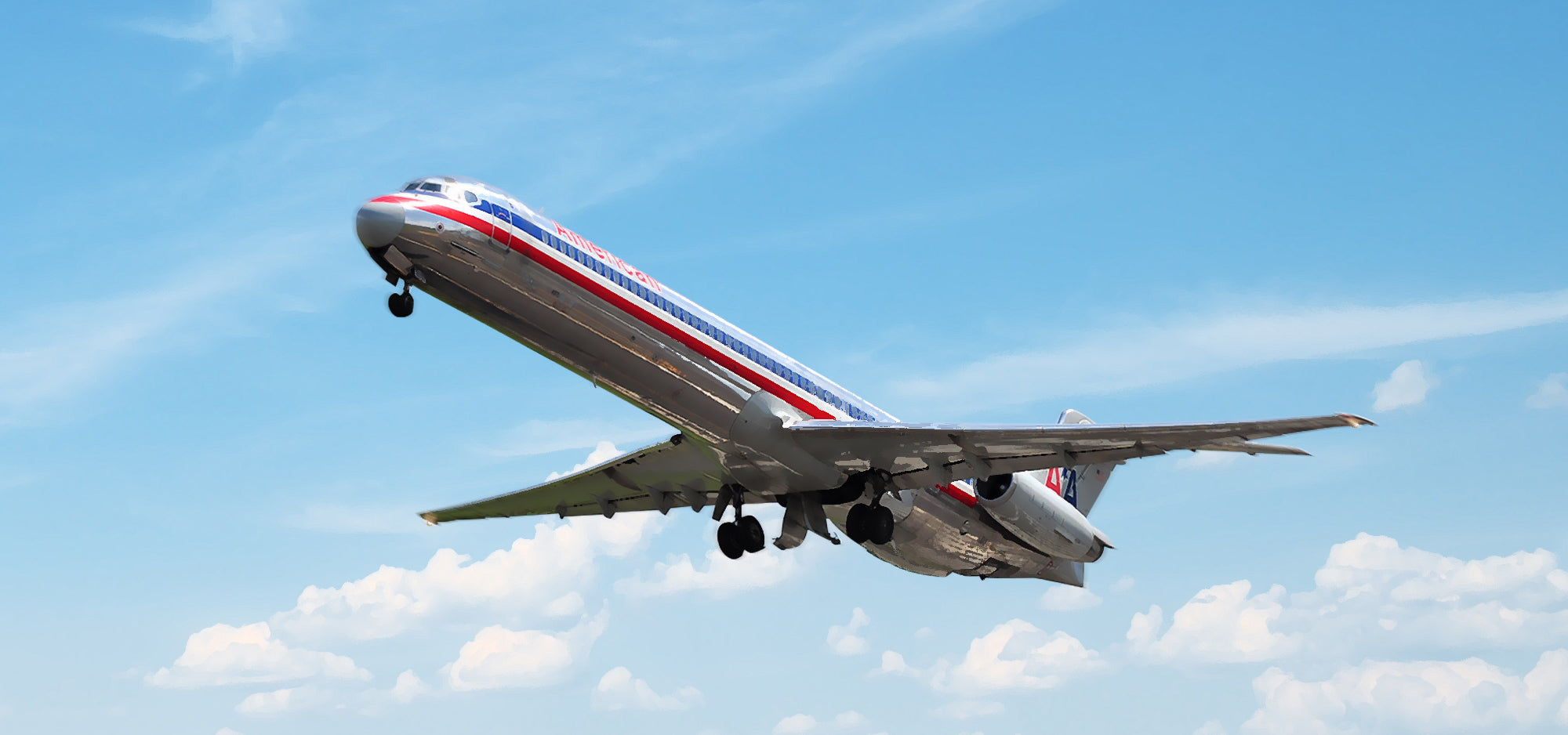
One of the most recognizable of those aircraft was the McDonnell Douglas MD-80, often referred to as the “Super 80.” While it was not the newest aircraft by the end of its service life, it played a central role in domestic air travel in the United States.
MD-82 N470AA is one of those aircraft. Delivered in 1988 and flown for nearly 28 years, it represents a period when the MD-80 was a consistent and familiar part of the flying experience.
Share:
Atlas Air 747: Bearing The Weight Of The World’s Cargo
Delta 757: The Backbone of the Fleet