

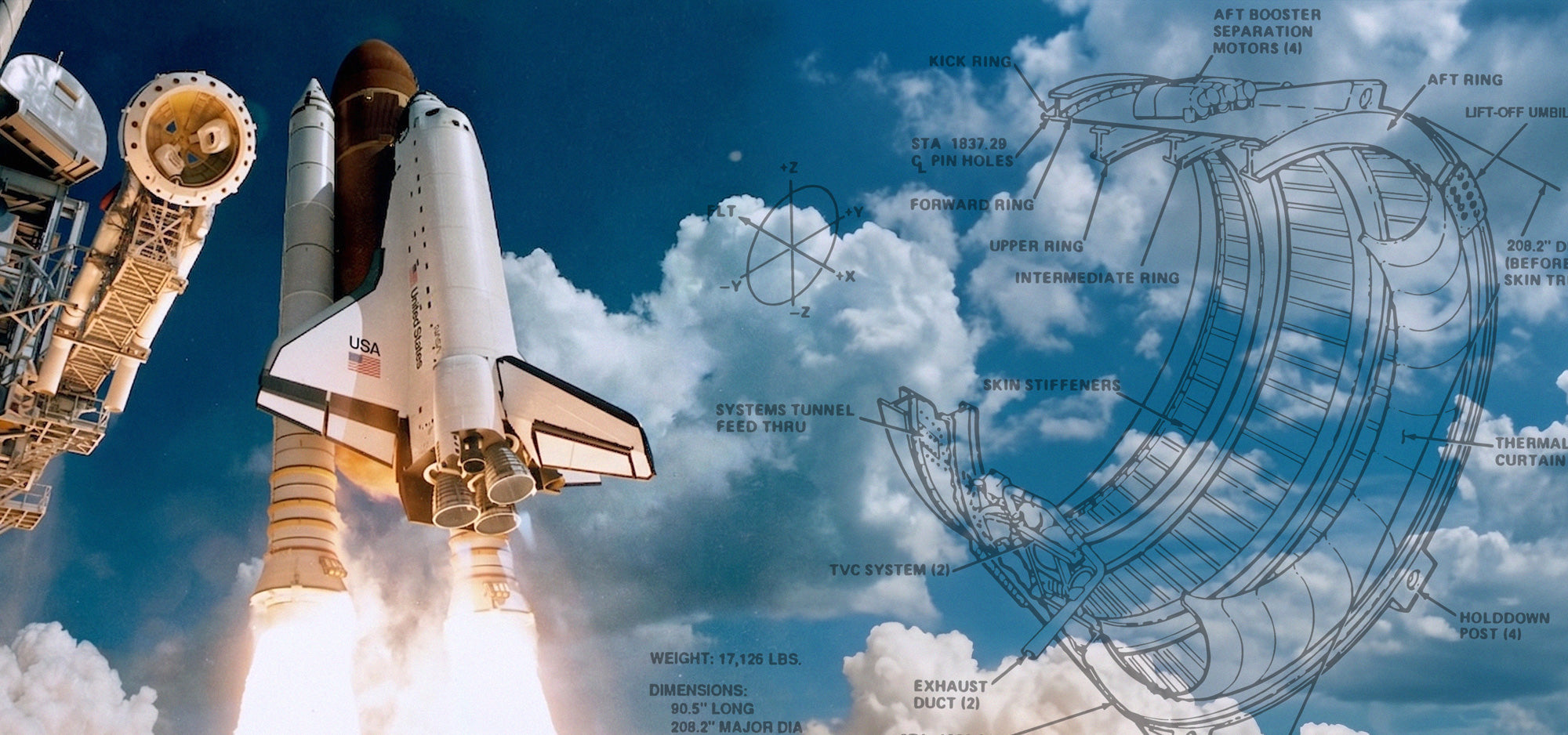
For 30 years, the Space Shuttle program defined a new era of human spaceflight. It carried astronauts into orbit, deployed satellites, helped build the International Space Station, and pushed the boundaries of what reusable spacecraft could achieve.
However, every Shuttle launch depended on something even more powerful. At liftoff, it was not the orbiter alone that carried the mission skyward. It was the combined force of the Shuttle’s main engines and its two Solid Rocket Boosters. These boosters delivered the majority of the thrust needed to break free from Earth’s gravity.
Now, a rare piece of that system remains. Aft Skirt S/N 13 is one of those components. It supported 10 Space Shuttle missions and played a critical role in launches involving Columbia, Challenger, Atlantis, Discovery, and Endeavour. Today, it stands as a powerful reminder of the engineering and ambition behind the Shuttle era.

By NASA - Columbia (STS-107), Challenger (STS-51-B), Discovery (STS-124), Atlantis (STS-132), Endeavour (STS-118), Public Domain, Link
Read part 2 in the series: 11 Missions, 5 Orbiters, One Remarkable Flight History: The Missions of Aft Skirt 13
What Was the Space Shuttle Program?
The Space Shuttle program, operated by NASA from 1981 to 2011, was designed to make spaceflight more routine and accessible. Unlike previous spacecraft, the Shuttle was partially reusable. Orbiters could return to Earth, be refurbished, and fly again.

STS-43. Photo courtesy of NASA
Over the course of 135 missions, the Shuttle fleet helped deploy the Hubble Space Telescope, conduct scientific research in orbit, and assemble the International Space Station. Each launch required a carefully coordinated system of components working together. Among the most important were the Solid Rocket Boosters.
The Role of the Solid Rocket Boosters
Every Shuttle launch relied on two Solid Rocket Boosters, or SRBs, attached to the sides of the external tank. At ignition, these boosters generated an immense amount of thrust, providing roughly 85 percent of the force required to lift the Shuttle off the launch pad. For the first two minutes of flight, they powered the vehicle through the densest part of Earth’s atmosphere.

By NASA/Marshall Space Flight Center - YouTube: STS-117 Nasa Space Shuttle SRB Separation – View/save archived versions on archive.org, Public Domain, Link
Once their fuel was exhausted, the boosters separated from the Shuttle and fell back to Earth under parachutes, where they were recovered and reused on future missions. The SRBs were among the most powerful solid-fueled rockets ever built, and they were essential to the success of the Shuttle program.
Space Shuttle Solid Rocket Booster At A Glance
Model: NASA Space Shuttle Solid Rocket Booster (SRB)
Manufacturer: Morton Thiokol
Height: 149 ft
Diameter: 12 ft
Propulsion: 1x Solid-fuel rocket motor
Fuel: Ammonium perchlorate composite propellant
Space Shuttle Solid Rocket Booster Performance
Range: ~141 mi downrange to ocean impact after separation
Max Speed: ~3,000 mph at booster separation
Operational Ceiling: ~150,000 ft before separation
Empty Weight: 193,000 lb
Loaded Weight: 1,300,000 lb
Thrust:
-
2,650,000 lb thrust (each booster)
-
Peak thrust closer to ~3.3 million lbf during ascent
Burn Time: ~124 seconds
Recovery System: Three-parachute ocean recovery and reuse
Additional Notes
Propellant Composition:
-
69.6–69.8% ammonium perchlorate (oxidizer)
-
16% aluminum powder (fuel)
-
~12% PBAN binder
-
~2% epoxy curing agent
-
small percentage iron oxide catalyst
Guidance: Hydraulic thrust-vector-control movable nozzle system
Role: Provided roughly 71–83% of total thrust during the first two minutes of Space Shuttle launch, depending on flight phase.
What Is the Aft Skirt of an SRB?

Space Shuttle Solid Rocket Boosters - photo by Scott Beale / Laughing Squid
At the base of each Solid Rocket Booster sits a critical structural component known as the aft skirt. The aft skirt connects the booster to the mobile launch platform and helps transfer the enormous forces generated during liftoff. It also supports systems that guide and control the booster’s movement during ascent.

Photo courtesy of NASA.
Inside and around the aft skirt are key mechanisms, including the attachment points for thrust vector control systems and the motors that help separate the boosters from the Shuttle after burnout.

Photo courtesy of NASA
In simple terms, the aft skirt is part of the foundation that anchors the booster at launch and helps direct its power safely and effectively. It is built to withstand extreme stress, vibration, and heat. With a diameter of approximately 18 feet and weighing around 13,000 pounds, it is both massive and incredibly strong.
The Missions of Aft Skirt S/N 13
Aft Skirt S/N 13 had an active and remarkable life within the Shuttle program. Over the course of its service, according to the California Science Center, it supported 11 missions, contributing to launches across multiple orbiters. These included:
-
Columbia
-
Challenger
-
Atlantis
-
Discovery
-
Endeavour
Few individual components were used across such a wide range of missions and vehicles. This makes S/N 13 especially significant, as it represents a broad cross-section of Shuttle history.
Each launch it supported carried astronauts, experiments, and payloads into orbit. Each mission added another chapter to its story. From early Shuttle flights in the 1980s to later missions in the 1990s, this aft skirt was present for some of the most important years of the program.

From Launch Hardware to Public Exhibit
After completing its service, Aft Skirt S/N 13 was preserved as part of the Space Shuttle program’s legacy. It became part of the collection at the California Science Center, where it will be used to help tell the story of the Shuttle and its supporting systems. As part of a Solid Rocket Booster display, it will offer visitors a rare opportunity to see the scale and complexity of these components up close. What was once hidden beneath the Shuttle at liftoff is now an educational artifact, allowing the public to better understand how these missions were made possible.
Continuing the Legacy
Artifacts like this help preserve the history of spaceflight and keep it accessible for future generations. They remind us of what was achieved and inspire what comes next. As part of that mission, we are working to share this history in a form that can be held, studied, and appreciated on a more personal level.

Stay tuned for more on how this remarkable piece of Space Shuttle history is being preserved. Sign up for early access and updates. Next up, more about the missions it served, and find out how we got our hands on an actual, flown Space Shuttle aft skirt.
Explore More from NASA
If you are interested in the aircraft and spacecraft that shaped exploration beyond Earth, explore our NASA collection to discover more stories of innovation, flight, and discovery. Don't miss our L-300 Starlifter PlaneTags, made from the Kuiper Airborne Observatory.


Share:
From Runway to Fairway: The Story Behind Our Delta 717 Golf Ball Markers
Built for Any Mission: The Lockheed C-130 Hercules